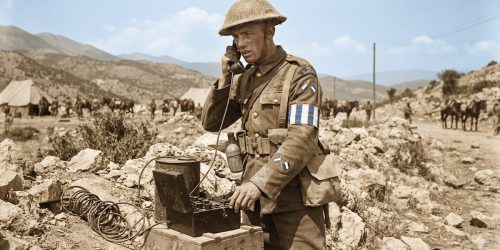
Henry Scatchard & The Five Battalions
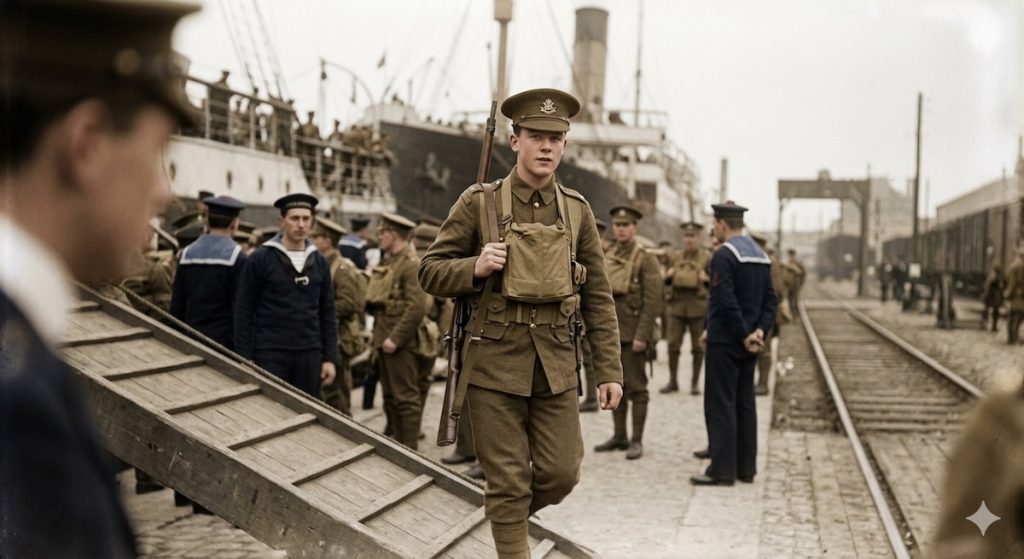
Driven by a mix of patriotic duty, adventure, and a desire to escape the exhausting demands of farm labour, Henry “Harry” Scatchard emerged as a remarkably resilient and elite soldier of the Great War. Born near Selby, he defied legal protections and age restrictions to volunteer for the British Army at just 16 years old, quickly earning the stripe of a Lance Corporal in the Duke of Wellington’s Regiment before his underage deployment to the brutal Ypres Salient was cut short. Undeterred, he later utilized his background as a skilled farm horseman to bypass the military grid under an alias, launching a legendary combat career that spanned multiple regiments, survived severe shrapnel and gunshot wounds, and culminated in his battlefield promotion to Acting Sergeant. Harry led platoon charges through machine-gun crossfire, returned home to marry his sweetheart after the Armistice, and left behind a flawless disciplinary record and an enduring legacy of raw grit.
Part I: The Pre-War Territorial & Underage Volunteer (1914–1915)
Henry Scatchard was born 24th August 1897, in Chapel Haddlesey, Yorkshire, a member of the first Bainbridge generation born and raised around Selby. Henry was 1st cousin to Charles Henry Bainbridge (1886-1942), Henry Dunnington (1886-1918), and our great grandfather John Henry BAINBRIDGE (1892-1940) — All of whom served in World War 1.
Following his widowed mother Ada’s remarriage to James Allison, a veteran who had completed 12 years of service with the West Yorkshire Regiment, the family relocated to Wheldale Farm in Ferry Fryston. By 1911, at just 13 years old, Henry was out of school and working full-time as a farm labourer.
The trajectory of Henry’s youth shifted dramatically around 1913. Rather than providing stable guidance, his stepfather, Private James Allison, deserted the family. Abandoned and left to fend for themselves, the teenager and his mother were suddenly saddled with the overwhelming responsibility of keeping the operation afloat. At just 15 years old, Henry stepped into the vacancy, becoming the primary Horseman for the farm. Working directly under his mother, Mrs. Allison, he managed heavy agricultural draft horses and endured grueling physical labour to sustain the household.
Because food production fell under Industrial Group 1 (Agriculture), Henry’s vital role as a horseman legally protected him from future conscription. Whether driven by the relentless grind of Wheldale Farm, a desire for adventure, or the deep patriotism shared by his Bainbridge cousins, the underage teenager cast his gaze toward the horizon—and the gathering storm in Europe.
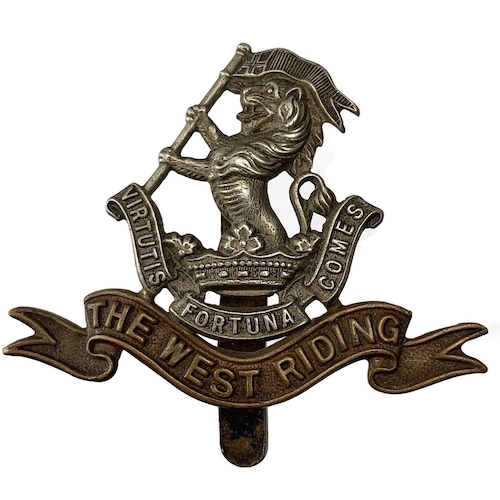
Either way, 16-year-old Henry chose to serve with the British Army. In February 1914, mere months before the outbreak of the Great War, he walked into the recruitment hub at Pontefract and joined the Territorial Force, enlisting in the Duke of Wellington’s (West Riding) Regiment2 under service number 2286. Standing 5’8” tall, weighing 130 lbs, with a powerful 36-inch chest capacity forged from farm labour, he was a model recruit.
When the inevitable war erupted in August 1914, his unit mobilized immediately. Henry’s maturity earned him an early appointment to Lance Corporal during winter training. On April 14, 1915, a 17-year-old Henry disembarked in France, thrusting him into the brutal opening campaigns of the Ypres Salient. For this early combat deployment, he was awarded the 1914–15 Star. Eventually, his true age was discovered by the War Office, or he succumbed to early trench illness, resulting in his evacuation back to England and his original service profile being frozen.
Part II: The Second Enlistment & The Tyneside Scottish (1916–1917)
Determined to return to the front lines, Henry bypassed the military grid by shifting his identity. On June 6, 1916, he went back to the Pontefract depot and signed a Short Attestation form under the alias “Harry Scatchard.” To clear the legal bar for adult service, he claimed to be 18 years and 5 months old (falsifying his birth year to January 1898), stated he had “no prior military experience” to avoid administrative flags, and utilized his background as a Farm Horseman to showcase his value to army logistics.
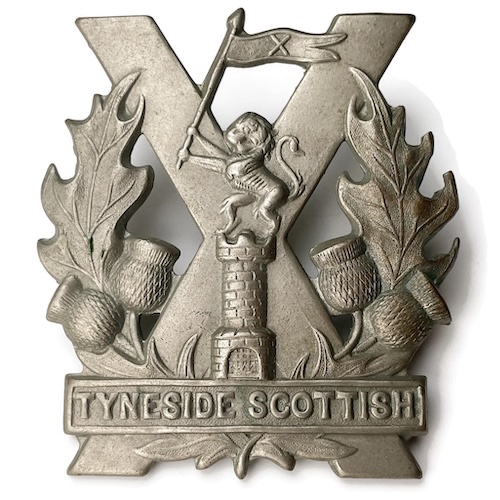
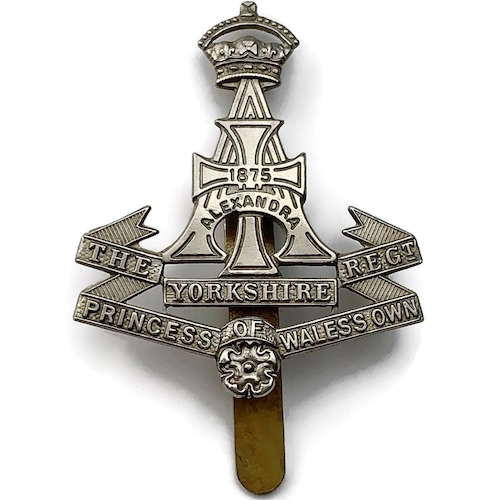
He was sent to Gifford Park Camp near Wetherby for basic training with the 14th (Reserve) Battalion of the Yorkshire Regiment (Green Howards)5 under service number 28544. After six months of training, he embarked for the British Expeditionary Force (B.E.F.) on December 16, 1916, landing at the 31st Infantry Base Depot in France. Two days later, he was posted to an elite frontline unit: The 20th Battalion, Northumberland Fusiliers (1st Tyneside Scottish)6 under service number 4627, joining his men in the trenches on December 19, 1916.
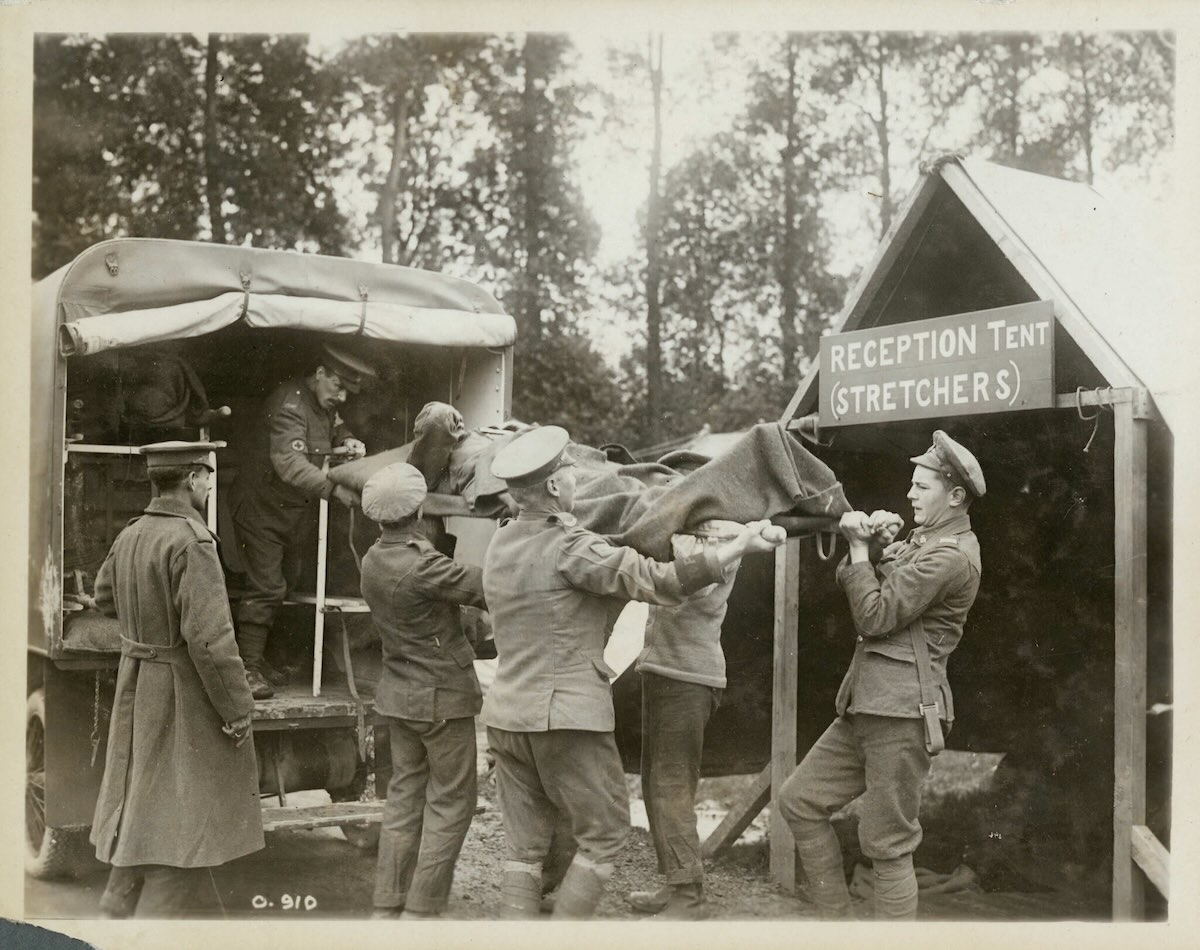
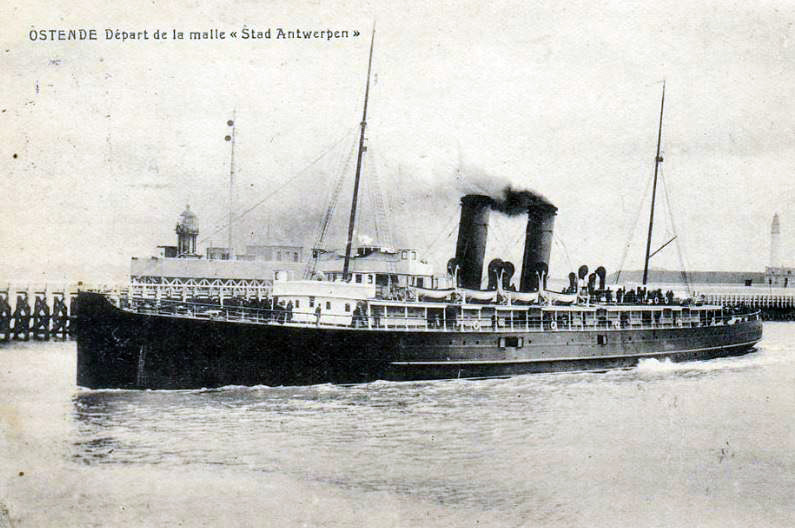
On June 7, 1917—the momentous opening day of the Battle of Messines7—Henry’s battalion charged into a storm of defensive German shellfire. Henry was severely hit, sustaining a shrapnel shell wound to his thigh. He was evacuated through the 2/1st West Riding Field Ambulance and No. 3 Canadian Casualty Clearing Station before being loaded onto the Hospital Ship Stad Antwerpen on June 13. He spent 182 days on home soil, which included a 37-day hospital stay and a grueling rehabilitation stretch at the Alnwick Command Depot8 before being posted to a reserve unit at East Boldon9 near Sunderland on October 9, 1917.
Part III: The Hallamshire Push & Breaking the Hindenburg Line (1917–1919)
On December 13, 1917, his thigh sufficiently healed, Henry boarded a troopship and landed back in France for his third combat tour, serving a continuous 294 days on the Western Front. By early 1918, he had earned a promotion to the permanent rank of Corporal. To replace staggering casualties across the B.E.F., Henry was officially transferred on August 5, 1918, to the 2/4th Hallamshire Battalion13, York & Lancaster Regiment14, receiving his final wartime service number: 57602.
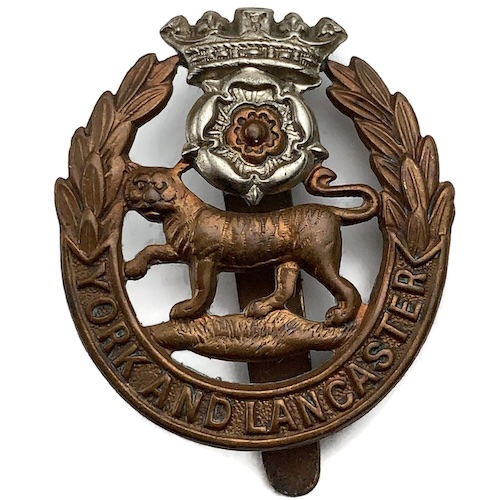
Y&R Cap Badge Design & Symbolism
The York and Lancaster Regiment, Imperial War Museum
The Tiger: A tiger passant gardant commemorating the 65th Regiment of Foot’s service in India.
The Rose: A combined red and white Tudor/Union Rose representing both Yorkshire and Lancaster.
The Coronet: The white metal coronet of a sovereign’s child (the Royal Ducal coronet of the Duke of York).
The Wreath and Scroll: Enclosed in a laurel wreath with a frosted scroll at the base inscribed with the unit title “York and Lancaster”.
During the victorious Allied “Hundred Days Offensive15,” Henry’s exceptional leadership led to his battlefield appointment as Acting Sergeant, putting him in command of an entire 30-to-40-man infantry platoon. On September 28, 1918, during the ferocious storming of the Canal du Nord (the heavily fortified outer works of the Hindenburg Line),16 Sergeant Scatchard led his men into machine-gun crossfire and was struck down a second time—shot cleanly through the left forearm.
He was evacuated back to England on October 3, 1918, spending 20 days at Christchurch Red Cross Hospital in Hampshire17, followed by 15 days of intensive physical rehabilitation at Derriford Convalescent Hospital in Plymouth. Because he left the field wounded, he officially relinquished his temporary field rank of Acting Sergeant and reverted to Corporal upon transferring back to England.
On November 7, 1918, four days before the war ended, Henry was discharged from the hospital. He was granted a highly anticipated convalescent furlough from November 9 to November 18, allowing him to return to Yorkshire. Henry was with his family at their new home in Smith Street, Fryston, on November 11, 1918, when the bugles blew for the Armistice.
When his leave expired, he reported to the York & Lancaster Regiment at East Boldon for administrative processing. On Boxing Day (December 26), 1918, Henry secured a holiday pass to marry his sweetheart, Emily Rutherforth, at St. Andrew’s Church in Ferrybridge. He stood at the altar proudly wearing his two-striped Corporal’s uniform, his left arm still heavily bandaged.
Eager to establish his civilian life, Henry returned to the depot and signed his formal Statement as to Disability on February 11, 1919, boldly declaring: “I do not claim to be suffering from a disability due to my military service.” By waiving his right to a medical wound pension, he bypassed weeks of military medical boards. On February 18, 1919, the Infantry Record Office officially demobilized him, transferring him into the Class Z Reserve with a completely flawless disciplinary record—certified by Captain J. Lea as having never incurred a single Regimental Entry on his conduct sheet.
- True Identity: Henry Scatchard (1914 Pre-war Territorial)
- Wartime Alias: Harry Scatchard (1916 Re-enlistment Identity)
- Highest Active Ranks: Acting Sergeant (Field) / Lance Sergeant (Reserve)
- Official Substantive Rank: Corporal / Lance Corporal
- Regimental Service Footprint:
- Duke of Wellington’s (West Riding) Regiment (No. 2286)
- 14th (Reserve) Battalion, Yorkshire Regiment / Green Howards (No. 28544)
- 20th Battalion, Northumberland Fusiliers / 4th Tyneside Scottish (No. 4627)
- 2/4th Hallamshire Battalion, York & Lancaster Regiment (No. 57602)
- 3rd (Reserve) Battalion, York & Lancaster Regiment (Section D Reserve)
- Specialist Qualifications: 2nd Class Shot (Marksman)
- Disciplinary Record: Flawless (Zero Regimental Conduct Sheet Entries)
Part IV: The Section D Reserve & Interwar Toll (1919–1939)
In addition to avoiding military medical boards, the declaration of no disabilities allowed Henry to immediately apply for the voluntary post-war Section D Army Reserve.19 He was accepted into the 3rd (Reserve) Battalion, York & Lancaster Regiment, holding the official rank of Lance Sergeant, securing a financial safety net for he and his wife. Furthermore, the army officially certified Henry as a 2nd Class Shot20. This was a remarkable physical achievement; despite carrying deep, restrictive scar tissue in his left forearm—the vital arm used to steady and aim a heavy service rifle—Henry’s grit allowed him to pass the army’s rigorous marksmanship testing. This reserve appointment secured Henry a critical retainer pay of 1 shilling a day for 4 years, injecting vital income into his household.
By 1921, Henry and Emily were living in a packed household of eight people at 3 Smith Street, Fryston, alongside his uncle, Thomas Leese. To support his family, Henry took a job as a heavy general labourer for the Airedale Co. Ltd.21 performing heavy manual labour right alongside the Fryston colliery rail lines.
Ultimately, the severe physical trauma of his teenage military service claimed his life. The compounding toll of underage trench exposure, a thigh shattered by shrapnel in 1917, a left arm shot through by a bullet in 1918, and two decades of swinging heavy tools in a colliery yard finally broke his health.
On September 29, 1939—exactly 21 years to the day after he was shot at the Hindenburg Line—the National Register recorded Henry living at 74 Park Crescent, Ferry Fryston, documented as fully “incapacitated” and cared for by Emily, living with their son Edmund who was working as a bus conductor. Two months later, his body failed him for the last time. Lance Sergeant Henry Scatchard passed away at the age of 42 and was buried at Holy Cross Church, Airedale with Fryston, on November 30, 1939. He was laid to rest in the West Riding soil he ploughed as a boy, leaving behind a legacy of absolute bravery, resilience, and unblemished character.
Family Tree
Henry Scatchard was one of four first cousins who all shared grandparents Henry BAINBRIDGE (1831-1891) & Jane SCOTT (1828-1872), our 3rd great grandparents. Each of Henry & Jane’s children John, Charles, Mary Ann, & Ada, had one child who volunteered to serve their country. Henry & Jane’s youngest child, Ada, was mother to Henry Scatchard.
- Henry BAINBRIDGE (1831-1891) & Jane SCOTT (1828-1872)
- John Bainbridge (1859-1935) & Harriet Ann Jenkinson (1860-1922)
- Bertha Pearson Jenkinson (1877-1970)
- Thomas Bainbridge (1881-1881)
- Jane Ann Bainbridge (1882-1959)
- John Jenkinson Bainbridge (1885-1959)
- Gertrude Bainbridge (1885-1964)
- Charles Henry Bainbridge (1886-1942) & Mary Wilson (1883-1977)
- George Stephen Bainbridge (1893-1967)
- Ada Mary Bainbridge (1894-1977)
- Sarah Amelia Bainbridge (1898-1974)
- Charles BAINBRIDGE (1861-1935) & Elizabeth A HEADLEY (1863-1935)
- Mary Jane Bainbridge (1884-?)
- Elizabeth Isabel Bainbridge (1886-1964)
- Charles Ernest Bainbridge (1887-1965)
- Arthur Bainbridge (1890-1939)
- John Henry BAINBRIDGE (1892-1940) & Adelaide EDGAR (1888-1975)
- Charles Reginald BAINBRIDGE (1915-1994) & Winifred May THOMPSON (1920-1977)
- Our direct line…
- Charles Reginald BAINBRIDGE (1915-1994) & Winifred May THOMPSON (1920-1977)
- Mary Ann Bainbridge (1863-1925) & James Dunnington (1862-1936)
- Henry Dunnington (1886-1918) & Eliza Ann Abrahams (1881-?)
- Ada M Bainbridge (1866-1951) & Thomas Scatchard (1857-1906)
- Henry Scatchard (1897-1939) & Emily Rotherforth (1898-1981)
- Edmund Wallace Scatchard (1919-1989)
- Lucy Scatchard (1899-?)
- Charles Scatchard (1901-1969)
- William Scatchard (1904-1965)
- Henry Scatchard (1897-1939) & Emily Rotherforth (1898-1981)
- John Bainbridge (1859-1935) & Harriet Ann Jenkinson (1860-1922)
Footnotes
- WW1 Duke of Wellingtons West Riding Regiment Cap Badge, British Military Badges ↩︎
- The Duke of Wellington’s Regiment (West Riding), National Army Museum ↩︎
- WW1 Yorkshire (Green Howards) Regiment Cap Badge, British Military Medals ↩︎
- WW1 1915 PATTERN Tyneside Scottish Regiment Cap Badge, British Military Badges ↩︎
- The Green Howards (Alexandra, Princess of Wales’s Own Yorkshire Regiment), National Army Museum ↩︎
- 20th Northumberland Fusiliers (1st Tyneside Scottish), Wikipedia ↩︎
- Battle of Messines (1917), Wikipedia ↩︎
- Alnwick Military Convalescent Hospital. For men from units in Northern and Scottish Commands, men whose homes were in Scotland or who belonged to Scottish regiments from any command, Northumberland, Military hospitals in the British Isles 1914-1918, The Long, Long Trail ↩︎
- Alnwick Command Depot, Alnwick & District Local History Society ↩︎
- Soldiers deliver wounded to a reception tent at a Canadian casualty clearing station [CWM/19920044-811], Legion, Canada’s Military Magazine ↩︎
- HS Stad Antwerpen, BirtwistleWiki ↩︎
- WW1 York and Lancaster Regiment Cap Badge, British Military Badges ↩︎
- 2/4th Hallamshire Batallion, York & Lancaster Regiment, Wikipedia ↩︎
- York & Lancaster Regiment, National Army Museum ↩︎
- Hundred Days Offensive, Wikipedia ↩︎
- Hindenburg Line, Wikipedia ↩︎
- Christchurch Hospital Dorset, Wikipedia ↩︎
- WW1 York and Lancaster Regiment Cap Badge, British Military Badges ↩︎
- Section D Army Reserve, British army reserves and reservists, The Long, Long Trail ↩︎
- The “Second Class Figure Target” was 48 inches square (approximately 1.2 × 1.2 metres), with 24 in (61 cm) inner and 36 in (91 cm) magpie circles. The aiming mark was a 12 in × 12 in (30 cm × 30 cm) silhouette figure that represented the outline of the head of a man aiming a rifle from a trench. Points were scored by a hit anywhere on the target. Mad Minute, Wikipedia ↩︎
- Airedale Co. Ltd. Durham Mining Museum ↩︎
References
- H Scatchard, Lance Corporal 2286 West Riding Regiment, Lives of the First World War, Imperial War Museum
- Harry Scatchard, Corporal 46274 Northumberland Fusiliers & Corporal 57602 York and Lancaster Regiment, Lives of the First World War, Imperial War Museum
- Researching a Duke of Wellington’s (West Riding) WWI Soldier, British Army Service Numbers
- Duke of Wellington’s (West Riding Regiment), Forces War Records, Ancestry.com
- Duke of Wellington’s (West Riding Regiment), Regimental Depot, Wellesley Barracks, Halifax, The Long, Long Trail
- Duke of Wellington’s Regiment, Wikipedia
- Green Howards (Alexandra, Princess of Wales’s Own Yorkshire Regiment), Wikipedia
- Alexandra, Princess of Wales’s Own (Yorkshire Regiment) (“Green Howards”), Regimental Depot, Richmond Castle Barracks, The Long, Long Trail
- The Royal Yorkshire Regiment (14th, 15th, 19th, 33rd/76th). A Family Tree from 1685, The Royal Yorkshire Regiment
- Tyneside Scottish, Wikipedia
- 2/4th Hallamshire Battalion, York & Lancaster Regiment, The Wartime Memories Project
- York & Lancaster Regiment, Regimental Depot, Pontefract Barracks, The Long, Long Trail
- List of York and Lancaster Regiment battalions, Wikipedia