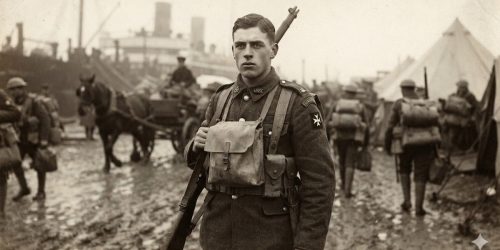
Henry Dunnington & Royal Engineers
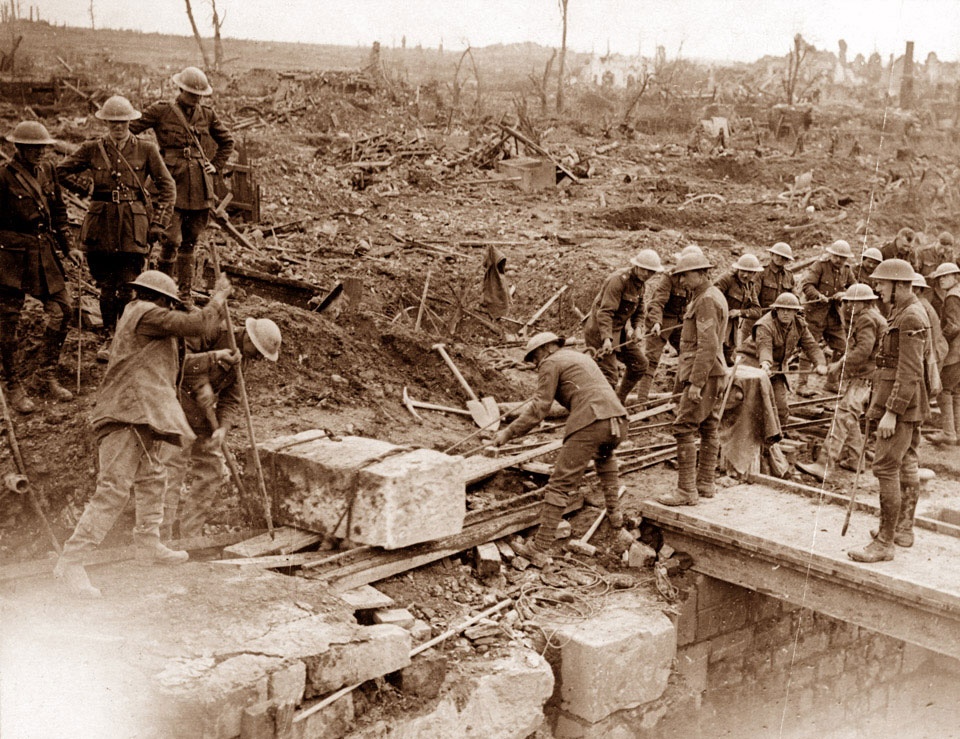
Sapper Henry Dunnington (1886–1918) was a skilled civilian bricklayer from North Yorkshire who deployed his trade on the front lines of Western Europe as a combat engineer. Serving during the climactic final campaigns of World War I, he was killed in action during the Allied “Hundred Days Offensive,” just thirty days before the signing of the Armistice.
The Tollerton Origin Story & Marriage
Henry’s story began with a lifelong family connection to the rural village of Tollerton, North Yorkshire. On August 17, 1886, his parents—James Dunnington, a signalman for the North Eastern Railway, and Mary Ann Bainbridge—were married at St. Mary’s Parish Church in the neighboring parish of Alne. Just five weeks later, on September 23, 1886, Henry was born in Tollerton. The baptism followed in quickly succession, also conducted at St. Mary’s Parish Church, on September 25, 1886. Barely forty days from the wedding march to the christening—talk about a quick turnaround!
Henry’s grandparents, Henry BAINBRIDGE (1831-1891) & Jane SCOTT (1828-1872), are our 3rd Great Grandparents, which makes Henry Dunnington our 1st Cousin 3x removed. When his parents chose the name for their newborn child, they looked directly to Mary Ann’s father, Henry, establishing a legacy that bound the boy tightly to his Tollerton grandfather.
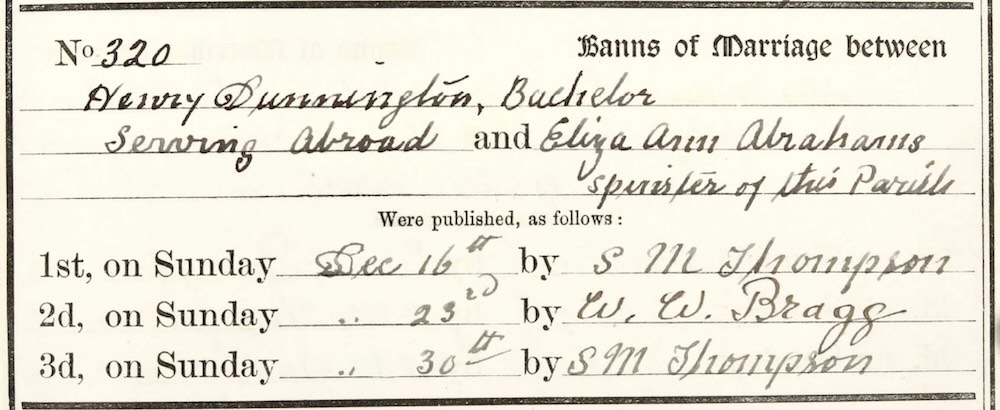
By 1901, his father’s railway career relocated the small family 22 miles north to North End, Northallerton, a major junction on the East Coast Main Line. While his father managed the heavy rail traffic, Henry broke away from the railway industry to apprentice as a bricklayer. The 1911 census show his parents living in a lineside railway cottage in nearby Danby Wiske, but Henry remained on North End, boarding independently at a home shared with a woman named Eliza Ann Abrahams. Over the following years, a deep bond formed between them. On December 30, 1917, while Henry was back in Yorkshire on a brief wartime leave, the couple officially read their marriage banns in Northallerton and wed.
Call to Arms: The Royal Engineer
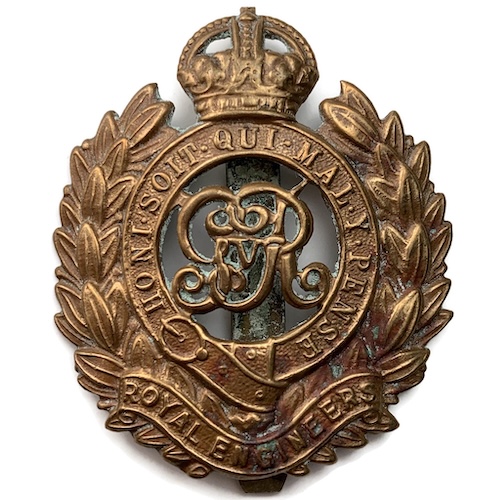
(George V) Cap Badge2
157th Field Company, Royal Engineers
When World War I broke out, Henry stepped into the Northallerton recruitment office to volunteer. Because the British Army had an immense need for men skilled in masonry, carpentry, and construction to build front-line fortifications, Henry was a prime candidate for the Royal Engineers.
He was sworn in as a Sapper (the engineer equivalent of a private) and assigned to the 157th Field Company, Royal Engineers. Field companies3 were highly mobile units that operated directly at the front lines, tasked with digging trenches, constructing bridges, maintaining vital supply roads, and managing water logistics.
The Western Front and the Final Advance
Sapper Dunnington deployed to the Western European Theatre mid-war. By the autumn of 1918, the Allied forces had broken the German lines and were engaged in the Hundred Days Offensive4, a rapid eastward advance across France and Belgium. As the German army retreated, they systematically sabotaged infrastructure, blowing up bridges and breaching canal banks to intentionally flood the landscape and slow the Allied advance. It became the critical, perilous task of the Royal Engineers to repair these breaches under fire to keep the infantry and artillery moving forward.
The 157th Field Company served as a divisional troops unit attached to the 16th (Irish) Division, who were heavily engaged in the Final Advance in Artois. By October, the Germans made heavy use of delayed-action mines buried under railways and key billets, designed to explode days or weeks after British troops occupied them. Sappers of the 157th were tasked with locating, defusing, and marking these hazards to prevent catastrophic losses in newly established Brigade and Divisional headquarters.
Ultimate Sacrifice at the Canal
On October 12, 1918, Henry’s unit was stationed near the frontline sector of Auchy, France. His section was ordered into a dangerous cutout along the Haute-Deûle Canal to patch a critical structural leak in the canal bank and assemble pontoon bridges.
While working on stopping the heavy flow of water and managing the collapsing banks, a severe structural failure occurred. Because the War Diary notes no concurrent enemy artillery or infantry action at that exact sector, military historians conclude they were killed in a tragic engineering accident—such as a sudden collapse of the heavy clay/mud banks, a structural failure of temporary retaining walls, or drowning due to the unpredictable, high-pressure influx of water. Henry and his fellow unit partner, Sapper James Joseph Leonard, were both killed. The 157th Field Company War Diary bluntly recorded the tragedy of the day:
“No. 3 [Section] in canal cut. Sprs Leonard and Dunnington killed and the stopping of the leak was not successful.”
Henry was 32 years old.
Remembrance and Legacy
His sudden death left Eliza Ann a war widow and dealt a profound blow to his aging parents. Sapper Dunnington was laid to rest close to where he fell at the historic Cambrin Military Cemetery in the Pas-de-Calais region of France (Grave Reference Q7). He rests alongside 800 Commonwealth soldiers, including Sapper Leonard, who died by his side.
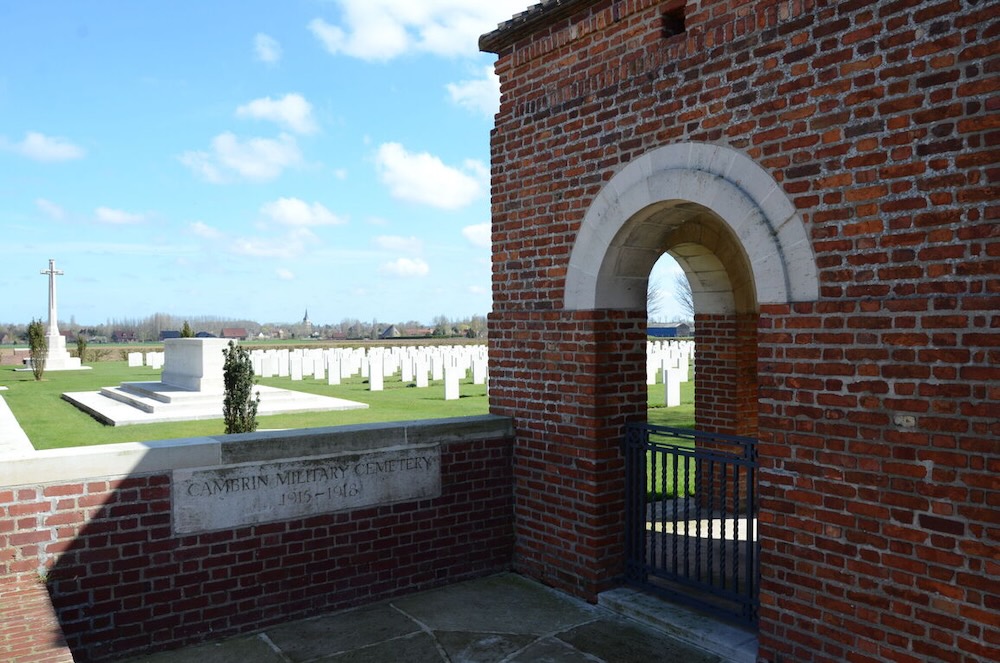
In 1921, his grieving parents were living at 1 Castle Hills, Northallerton—a railway-allocated house overlooking the very lines his father operated. There, they received his British War and Victory Medals6 alongside his bronze Memorial Plaque. Wishing to bind him forever to his family roots, James and Mary Ann added Henry’s name to their own future headstone at St. Mary’s Churchyard in Alne (Plot 60440).
At the base of his actual military headstone in France7, his family chose to carve a final, permanent scriptural tribute:
“UNTIL THE DAWN BREAKS AND THE SHADOWS FLEE AWAY. HIS DUTY DONE.”
Family Tree
Henry Dunnington was one of four first cousins who all shared grandparents Henry BAINBRIDGE (1831-1891) & Jane SCOTT (1828-1872), our 3rd great grandparents. Each of Henry & Jane’s children John, Charles, Mary Ann, & Ada, had one child who volunteered to serve their country. Henry & Jane’s elder daughter, Mary Ann, was mother to Henry Dunnington.
- Henry BAINBRIDGE (1831-1891) & Jane SCOTT (1828-1872)
- John Bainbridge (1859-1935) & Harriet Ann Jenkinson (1860-1922)
- Bertha Pearson Jenkinson (1877-1970)
- Thomas Bainbridge (1881-1881)
- Jane Ann Bainbridge (1882-1959)
- John Jenkinson Bainbridge (1885-1959)
- Gertrude Bainbridge (1885-1964)
- Charles Henry Bainbridge (1886-1942) & Mary Wilson (1883-1977)
- George Stephen Bainbridge (1893-1967)
- Ada Mary Bainbridge (1894-1977)
- Sarah Amelia Bainbridge (1898-1974)
- Charles BAINBRIDGE (1861-1935) & Elizabeth A HEADLEY (1863-1935)
- Mary Jane Bainbridge (1884-?)
- Elizabeth Isabel Bainbridge (1886-1964)
- Charles Ernest Bainbridge (1887-1965)
- Arthur Bainbridge (1890-1939)
- John Henry BAINBRIDGE (1892-1940) & Adelaide EDGAR (1888-1975)
- Charles Reginald BAINBRIDGE (1915-1994) & Winifred May THOMPSON (1920-1977)
- Our direct line…
- Charles Reginald BAINBRIDGE (1915-1994) & Winifred May THOMPSON (1920-1977)
- Mary Ann Bainbridge (1863-1925) & James Dunnington (1862-1936)
- Henry Dunnington (1886-1918) & Eliza Ann Abrahams (1881-?)
- Ada M Bainbridge (1866-1951) & Thomas Scatchard (1857-1906)
- Henry Scatchard (1897-1939) & Emily Rotherforth (1898-1981)
- Lucy Scatchard (1899-?)
- Charles Scatchard (1901-1969)
- William Scatchard (1904-1965)
- John Bainbridge (1859-1935) & Harriet Ann Jenkinson (1860-1922)
Footnotes
- North Yorkshire, England, Church of England Marriages and Banns, 1754-1937, Ancestry.com ↩︎
- WW1 Royal Engineers Corps (George V) Cap Badge, British Military Badges ↩︎
- Field Companies of the Royal Engineers, The Long, Long Trail ↩︎
- Hundred Days Offensive, Wikipedia ↩︎
- Sapper Henry Dunnington, Service Number: 139880, Regiment: Royal Engineers, 157th Field Coy, Cambrin Military Cemetery Q7, Commonwealth War Graves Commission ↩︎
- Spr Henry Dunnington in UK, World War I Service Medal and Award Rolls, 1914-1920, Ancestry.com ↩︎
- Spr Henry Dunnington, Cambrin Military Cemetery, FindaGrave.com ↩︎
References
- Photograph of Royal Engineers repairing a bridge on the Western Front, 1918. During the ‘Hundred days’ (8 August to 11 November 1918), the Allies launched a series of offensives along the line which drove the Germans back. The units of the Royal Engineers played a vital role in assisting the armies advance. Their work included road and rail repairs and bridging rivers and canals. NAM Accession Number 1999-11-70-39, Out of Copyright, National Army Museum.
- UK, Soldiers Died in the Great War, 1914-1919, Ancestry.com
- Sapper Henry Dunnington, R.E., Regtl. No. 139880, British Army WWI Medal Rolls Index Cards, 1914-1920, Ancestry.com
- Sap. Henry Dunnington, R.E. Regtl. No. 99917, UK, WWI, Pension Ledgers and Index Cards, 1914-1923, Fold3.com
- Spr. Henry Dunnington, RE, 157th Field Co. 139880, in UK, Army Registers of Soldiers’ Effects, 1901-1929, Ancestry.com
- 139880 Sapper H Dunnington, Royal Engineers, 12th October 1918, age 32, Gravestone at Cambrin Military Cemetery, Geneanet
- Sapper James Joseph Leonard, 157th Field Company, Royal Engineers, age 30, Epitaphs of the Great War
- Sapper Henry Dunnington, Royal Engineers, A Street Near You
- Medal card of Dunnington, Henry Corps: Royal Engineers Regiment No: 139880, Ref WO 372/6/125282, The National Archives
- Henry Dunnington, SAPPER, Service No. 139880, Son of James and Mary Dunnington, of I, Castle Hills, Northallerton, Yorks. Every One Remembered
- We Remember Henry Dunnington, British Army Sapper139880 Royal Engineers, Lives of the First World War, Imperial War Museums
- The war diary shows that in October 1918 the Company were based in Auchy constructing pontoons for crossing the Haute-Deûle Canal and attempting to stop a leak or a ‘cut’ in the canal bank. The diary for 13 October records: ½No. 3 (Section) in canal cut. Sappers Leonard and Dunnington killed and the stopping of the leak was not successful. Dungannon War Dead Database, Mid Ulster Branch, Friends of the Somme.