Augustus McDonald & Royal Flying Corps
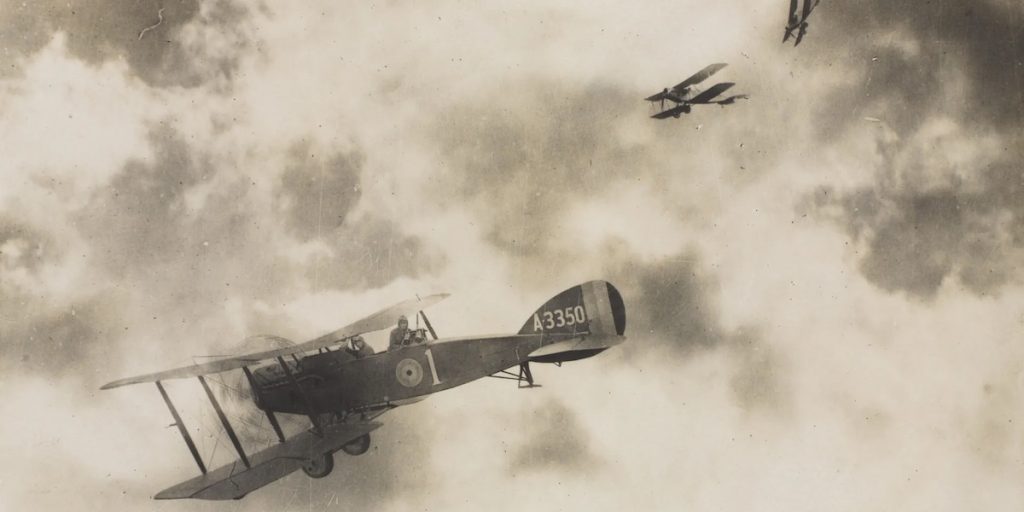
The life of Augustus McDonald offers a captivating window into the courage and endurance of the British working class during an era of global upheaval. A lifelong resident of York, Augustus transitioned from a peaceful civilian career as a hairdresser to enlisting in the Royal Flying Corps during the height of the First World War. Assigned as an officer’s batman on the Western Front, he occupied a highly trusted, deeply personal role that bridged rigid class divides amidst the constant threat of aerial bombardment, rapid squadron relocations, and artillery fire. While Augustus managed the logistics and domestic upkeep of his squadron’s officers in France—witnessing history unfold up to the Armistice—his story remains equally anchored in the home front. Back in York, his newlywed wife endured the primitive, grueling realities and environmental hazards of the impoverished Dennis Street slums. Through intense personal loss and military sacrifice, his biography captures the profound resilience of a generation defined by duty.
Early Life and Family Tragedy
Born in York, on July 16, 1892, Augustus, our 1st cousin 2x removed, was the eldest child of our Great Grand Aunt Elizabeth McDonald (née Edgar) & Timothy McDonald. His father worked through grueling manual shifts as a glass bottle stopper maker at the York Glassworks, Fishergate. Growing up in a two-up two-down at 8 Ancroft Street, Augustus was soon followed by siblings Wilfrid Harold (1894-1990, Mabel (1897-1912), Hector (1900-1912), and much later, George Ernest (1910-2004). By 1911, an 18-year-old Augustus had moved with his family across the road to 9 Ancroft Street, Fishergate, with a third bedroom, and had started his lifelong trade as a hairdresser.
In late 1912, immense tragedy struck the family home. Within a matter of weeks, Augustus lost two of his teenage siblings. His 13-year-old sister, Mabel, passed away on November 1, and his 11-year-old brother, Hector, died at home on November 27. These losses left Augustus and his remaining brothers, Wilfrid & George, to anchor the family alongside their parents.
Pre-War Marriage and WWI Service
As the shadow of the First World War deepened, Augustus experienced major life milestones in rapid succession. On July 4, 1917, at the age of 24, he married Ellen Hick in York. Their newlywed peace was short-lived.
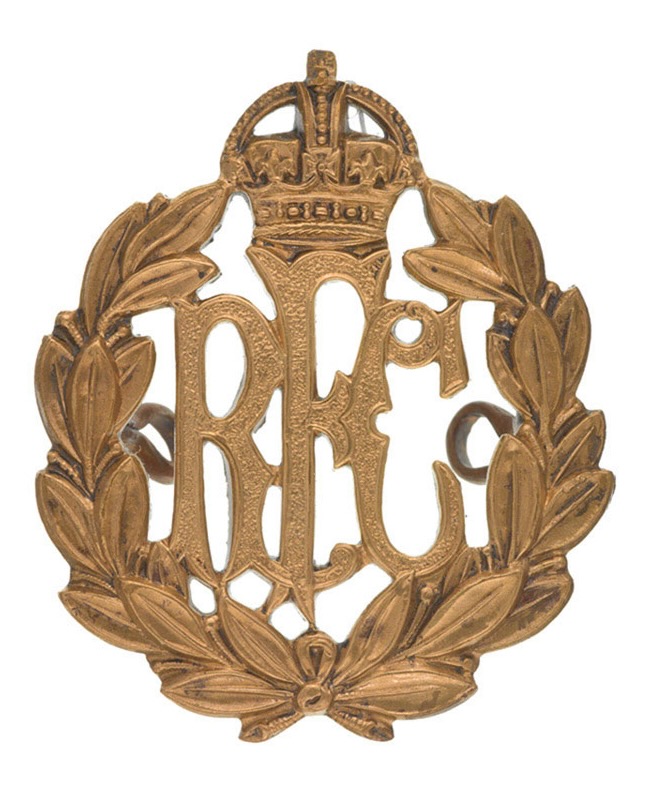
Barely a month later, on August 22, 1917, Augustus formally enlisted for hostilities as a Roman Catholic recruit. Standing 5 feet, 3¾ inches tall with a 30-inch chest profile, he was assigned to the 59th Squadron2 of Royal Flying Corps, Regt No. 92684. His expertise in personal grooming and civilian domestic upkeep made him an ideal candidate for the role of a Private 1st Class officer’s batman.
Under the British Army and Royal Flying Corps “War Establishments” rules at the outbreak of the war, every single commissioned officer deployed with a field unit was assigned an individual batman. This meant that even a teenage Second Lieutenant (the absolute lowest commissioned officer rank) arriving straight from training was automatically given an enlisted soldier, such as a Private 2nd Class, to serve as his personal orderly.
The system structured allocation by rank and need:
- Junior Officers (Second Lieutenants & Lieutenants): Entitled to one batman. If the officer was required to keep a horse for his duties, he was permitted a second batman to act specifically as a groom.
- Senior Officers (Majors and above): Entitled to multiple batmen and orderlies to look after their larger field kits, administrative quarters, and multiple horses.
In the British military during World War I, the official term for a batman was a “soldier-servant.” It was an essential and highly trusted role.
Core Daily Duties
The Royal Flying Corps (RFC) operated on mobile airfields behind the front lines rather than in muddy trenches, therefore a batman’s routine focused heavily on maintaining domestic order, technical upkeep, and tactical mobility for the squadron’s officers and pilots. A batman functioned as a hybrid of a personal valet, a logistical coordinator, and a bodyguard. His daily responsibilities included:
- Valet & Uniform Upkeep: Officers were expected to maintain strict standards of dress, even in active combat theatres. The batman meticulously polished boots, cleaned leather sam browne belts,3 repaired torn uniforms, and prepared the officer’s kit.
- Quarters & Domestic Comfort: Batmen were responsible for setting up, cleaning, and packing away their officer’s tent or temporary quarters. They kept braziers lit for heat, hauled water for washing and shaving, and ran errands to the officers’ mess.
- The “Bat-Horse” & Gear Logistics: The term “batman” originally derived from the bat-horse, which carried an officer’s valise (pack saddle and field kit). The batman was tasked with securely managing, packing, and transporting all of an officer’s personal and operational luggage whenever the squadron relocated to a new airfield.
- Tactical Support: Batmen acted as trusted personal messengers or “runners,” carrying orders between squadron headquarters and individual flights.
The Reality of Daily Life on the Front
- A “Desirable” Position: Among ordinary enlistees, becoming a batman was widely seen as a coveted job. It usually exempted a soldier from the most exhausting manual labor of the base—such as digging trenches or endless guard duty—and often meant access to slightly better food, cleaner quarters, and favours from their assigned officer.
- Deep Personal Bonds: Living in close quarters under wartime stress forged unique, deeply loyal relationships across rigid British class lines. J.R.R. Tolkien famously based the fiercely loyal relationship between Samwise Gamgee and Frodo Baggins on the WWI batmen he observed while serving.4
- Ever-Present Danger: Despite being a non-combat support role, a batman was a fully trained, armed soldier. In an RFC reconnaissance unit like the 59th Squadron, airfields were frequent, priority targets for long-range German artillery and retaliatory nighttime aerial bombing raids. If an officer was killed in action, it fell upon the batman to respectfully inventory, pack, and ship their personal effects back home to the grieving family.
The specific identity of the officer Augustus McDonald served as a batman to is not explicitly named in his official service records. During World War I, standard military records for non-commissioned personnel tracked individual movements, ranks, and squadron attachments (such as his assignment to the 59th Squadron), but they rarely documented the names of the individual officers an orderly or batman was assigned to look after.
Augustus officially embarked for the Western Front on September 7, 1917. Upon arriving in France, he was initially attached to the Grand Headquarters (G.H.Q.) 3rd Brigade5 before transferring into the 59th Squadron. While he managed the field quarters, gear, and uniforms of the squadron’s officers behind the lines, Ellen remained at 3 Dennis Street, Walmgate, York—the address formally designated on his military file for emergency casualty notifications.
Ellen Hick & Dennis Street Slums of York
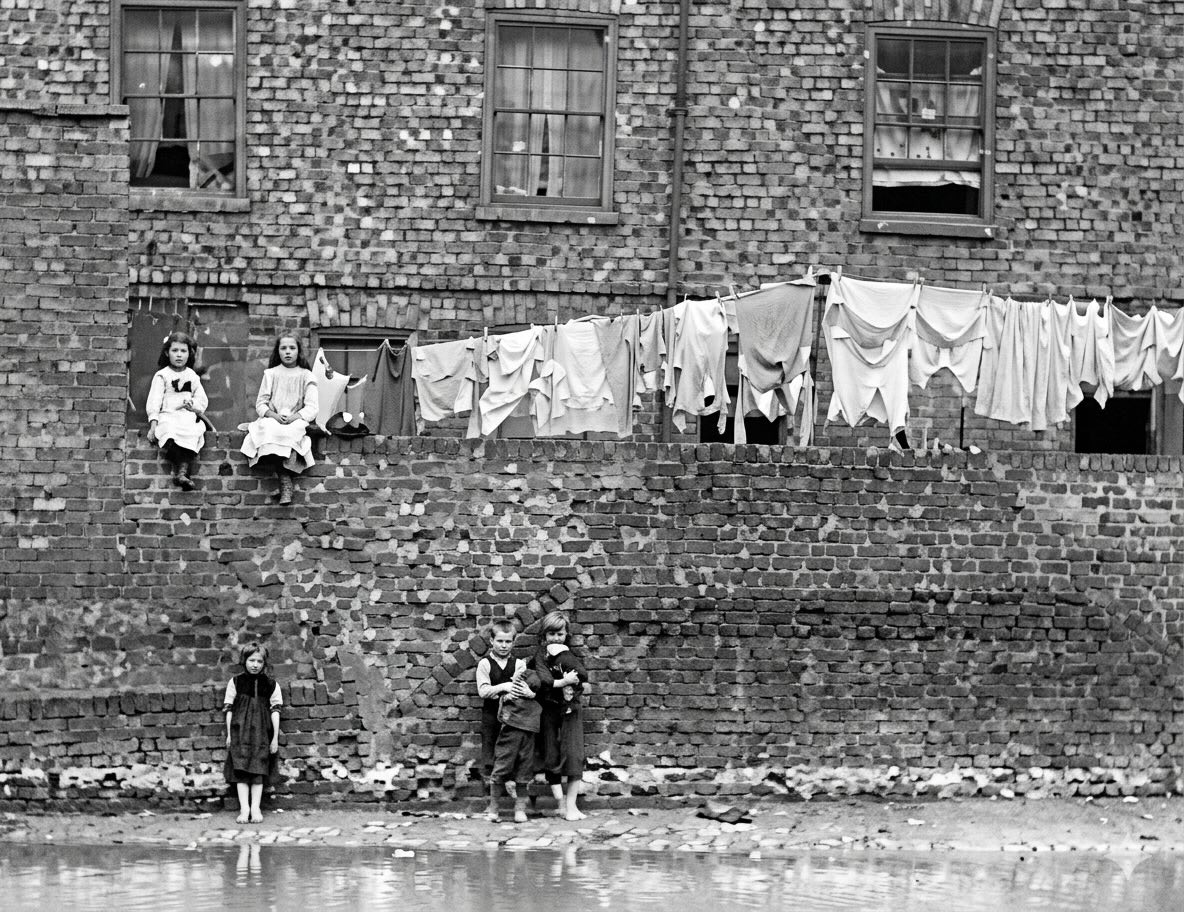
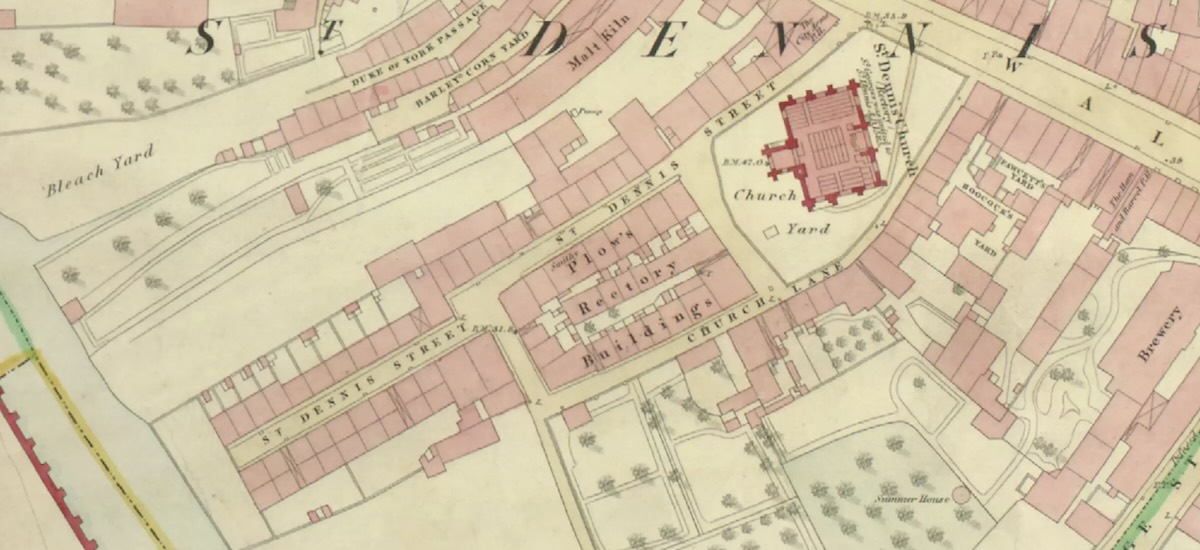
In 1917, during the height of the First World War, living at 3 Dennis Street, York7 meant inhabiting one of the city’s most impoverished, high-density slum districts, located right off Walmgate.8 For a soldier’s wife living alone, the physical accommodations would have been incredibly harsh, primitive, and isolating, characterized by the following conditions:
Structural Layout & Size
The Living Space: The property was a small, brick-built terrace house or part of a subdivided court yard. If she was living completely alone, she likely occupied only a single room or a tiny dual-room setup (a ground-floor living room/kitchen and a small bedroom directly above it).
The Atmosphere: The rooms were notoriously dark, poorly ventilated, and damp. Heating and cooking relied entirely on a single coal-fired grate or kitchen range, meaning she would have spent significant effort hauling coal up the narrow street.
Lack of Sanitation & Amenities
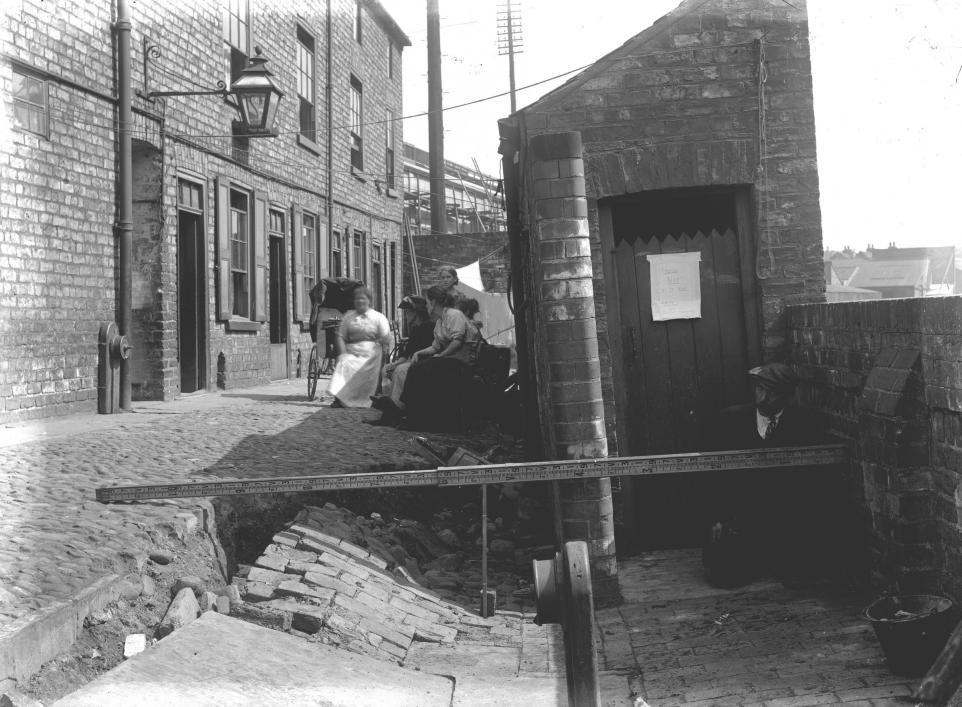
Shared Toilets: There was no indoor plumbing. A soldier’s wife at this address would have had to share an outside privy (toilet) with multiple neighboring families. In Dennis Street, these shared facilities were frequently overflowing, unhygienic, and structurally unsafe.
Water Access: Fresh water came from a single shared outdoor standpipe or tap located in the street or alleyway. Every drop of water for drinking, cooking, and washing clothes had to be carried indoors by hand in buckets.
Laundry: Washing was a grueling, communal task. She would have boiled water over her coal fire, used a manual washing mangle out in the communal yard, and strung her laundry across the tight brick alleyways of Dennis Street to dry.
Environmental Hazards
The River Foss: Dennis Street terminated directly at the banks of the River Foss. In 1917, the river acted as a commercial and industrial conduit, making it highly polluted. The lower end of the street was prone to dampness, stagnant air, and occasional flooding, worsening the damp conditions inside number 3.
Overcrowding & Vermin: While she may have lived alone in her specific unit, the surrounding buildings were packed to capacity with large families. These dense conditions, combined with poor waste management, meant that mice, rats, and lice were a constant daily battle.
The Social Reality for a Soldier’s Wife
Living here alone, her existence would have been dictated by the Separation Allowance—the weekly government payment granted to wives of serving soldiers. Because this allowance was meager, it barely covered the cost of food and coal, forcing many women in the Walmgate area to take on grueling local factory work or casual laundry jobs to survive.
Despite the physical grimness of 3 Dennis Street, she would not have been entirely isolated. The women of Dennis Street formed tight-knit, fiercely supportive communities, frequently gathering on the doorsteps and cobblestones to share news from the front lines, help look after one another, and find solidarity amid structural poverty.
Back to the Front
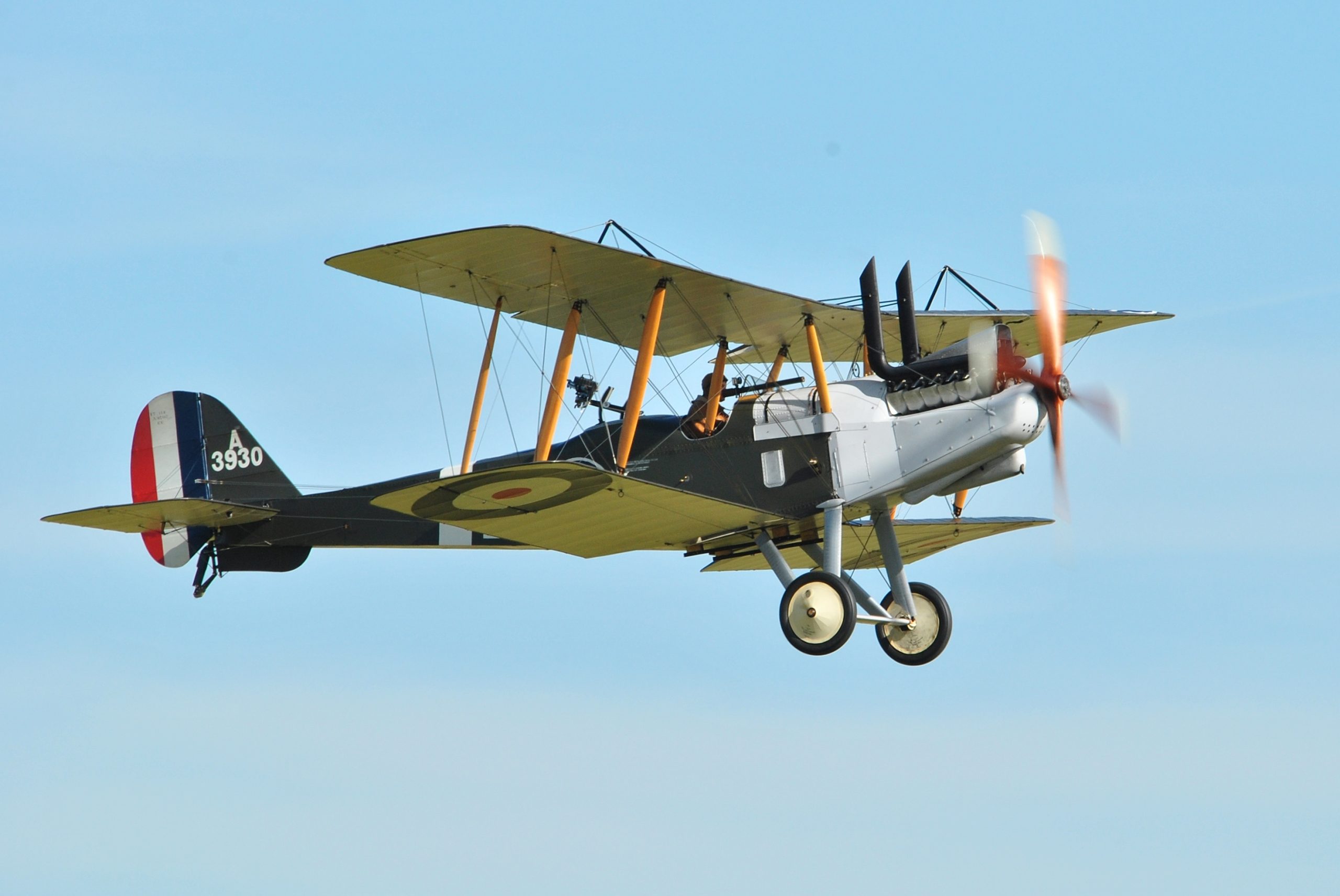
During Augustus McDonald’s deployment with the 59th Squadron from September 7, 1917, to March 5, 1919, the unit was heavily engaged in critical historical events on the Western Front in northern France. Operating as an Army co-operation and reconnaissance squadron, its primary duties included photographic mapping, contact patrols, and artillery spotting using the rugged but unglamorous Royal Aircraft Factory R.E.812 aircraft (often nicknamed the “Harry Tate”).
The Official Operations Record Books (ORBs)13 and unit histories detail several major milestones and trials the squadron survived during his exact months of service. As the Allies advanced and retreated across the Western Front, the squadron moved between several key airfields. Because Augustus was an officer’s batman, he would have moved directly with the squadron’s Headquarters Flight to each of these airfields to set up the officers’ quarters and maintain their gear in the field.
The Mud of the Somme and the Battle of Cambrai (Late 1917)
September 1917, the squadron was split between Fienvillers and Vert Galand in the Somme region. The squadron was tasked with flying Royal Aircraft Factory R.E.8 aircraft low over enemy trenches to map out German positions. In November 1917, the 59th Squadron provided aerial intelligence and artillery spotting for the historic Battle of Cambrai14, famous for the first mass deployment of tanks.
On December 23, 1917, the squadron suffered a massive blow when its Commanding Officer, Major Robert Egerton, was tragically killed in an airfield aircraft crash. Augustus likely would have witnessed the shock this caused at the Headquarters Flight. Command was subsequently taken over by Major Charles Joseph MacKay.
Weathering the German Spring Offensive (March–April 1918)
In March 1918, the German military launched Operation Michael (the Spring Offensive)15, a massive push that tore through Allied lines. As the British army retreated, the airfields became vulnerable to long-range artillery and advancing ground troops. The 59th Squadron had to fly intense, hazardous low-level bombing and strafing missions to slow the German advance.
Amidst this chaos, on April 1, 1918, Augustus and his unit officially transitioned from the Royal Flying Corps to the newly formed Royal Air Force.16
Re-equipping with the Bristol Fighter (Spring 1918)
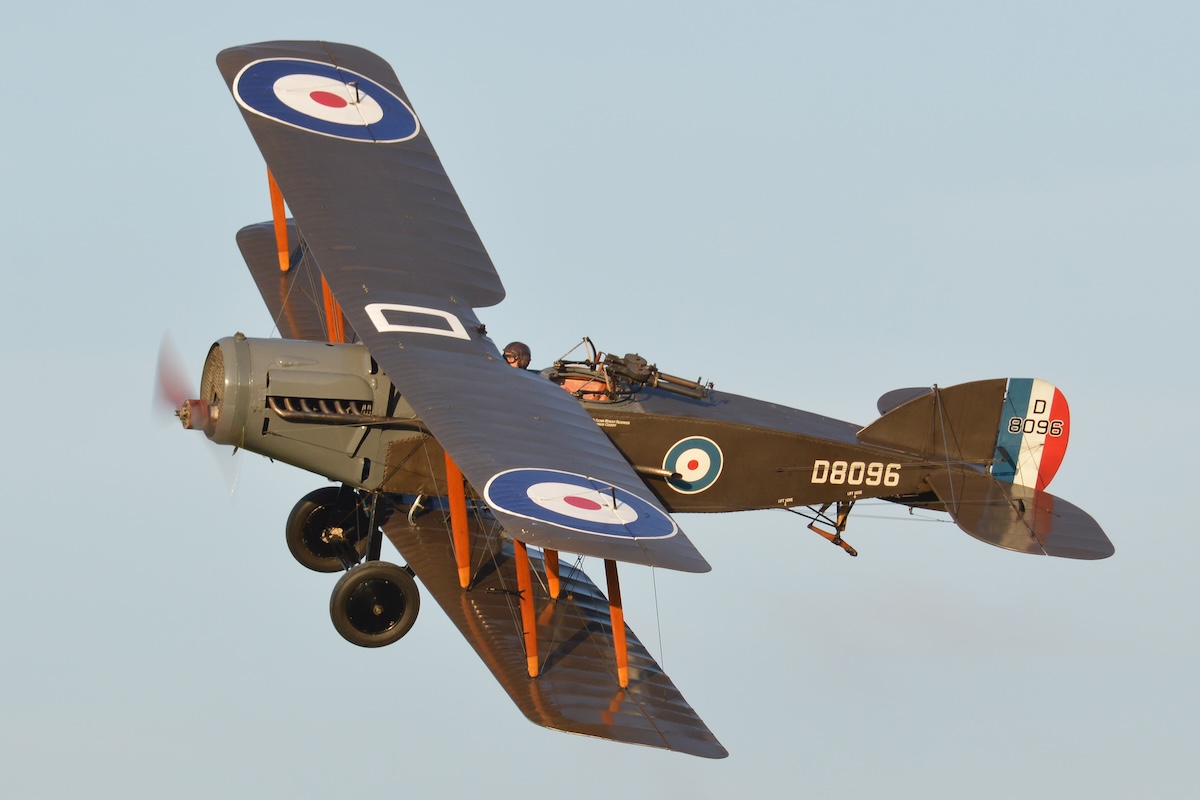
The R.E.8 aircraft were slow and highly vulnerable to German fighter aces. To survive the increasingly deadly skies, the squadron began to re-equip and integrate the much faster and heavily armed Bristol F.2b Fighter18 into its ranks by April 1918, drastically changing the mechanical maintenance routine around the base.
The Hundred Days Offensive and Moving East (Autumn 1918)
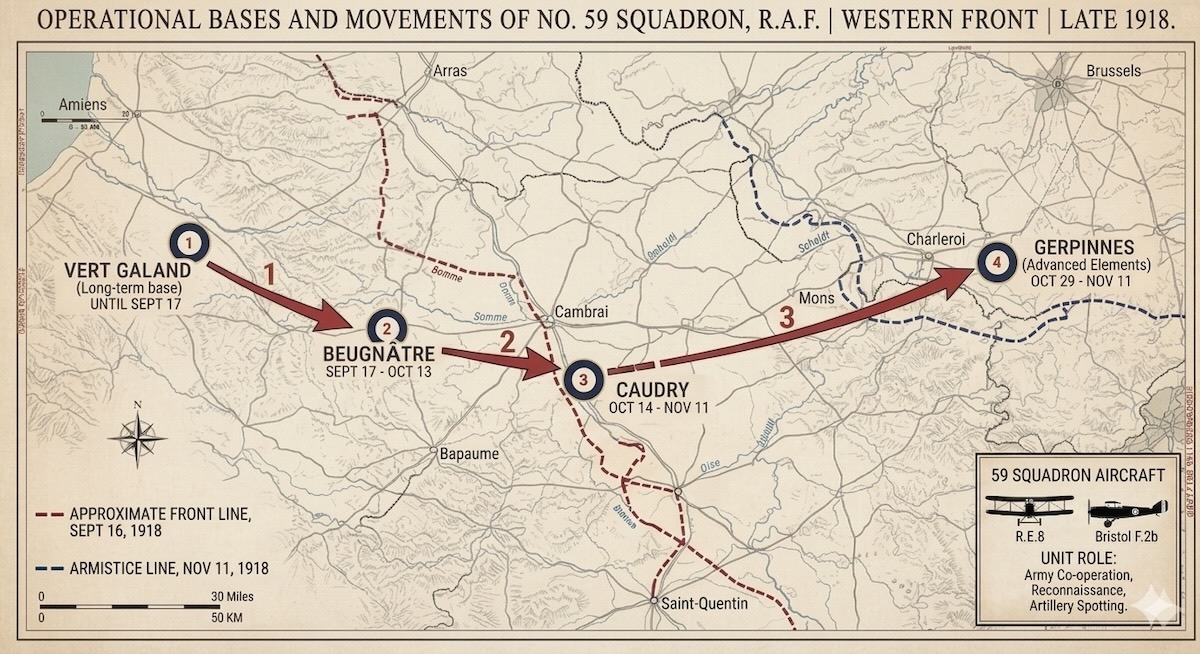
During the final Allied push that broke the German army, the 59th Squadron became a highly mobile unit, rapidly advancing eastward across shattered French territory to keep up with the moving front line.
In September the squadron uprooted from its long-time home at Vert Galand and moved east to Beugnâtre (near Bapaume) following the successful Allied push during the Hundred Days Offensive.19 By October they packed up and moved further east to Caudry (near St. Quentin). Elements of the squadron even pushed toward Gerpinnes as the Germans retreated toward Belgium.
For Augustus and the rest of the ground crew, these rapid relocations meant endless packing of heavy gear, moving mobile hangars, and setting up temporary officers’ quarters in highly fluid conditions.
The Armistice at Caudry
By November 11, 1918, when the Armistice was signed to end the fighting, the 59th Squadron was stationed at Caudry.20 To mark the historic moment, the Imperial War Museum holds a formal group portrait taken at Caudry on Armistice Day showing Major MacKay and the Headquarters Flight21—the exact administrative group Augustus worked alongside as an officer’s batman. Only officers were in the photograph. Augustus remained stationed with them in France through the winter.
Augustus was posted back to England on March 5, 1919, and officially transferred to the Class G RAF Reserve22 on April 11, 1919. For his wartime service in the French theatre, he was decorated with the British War Medal and the Victory Medal.
Post-War Stability, Suburban Move, and Children
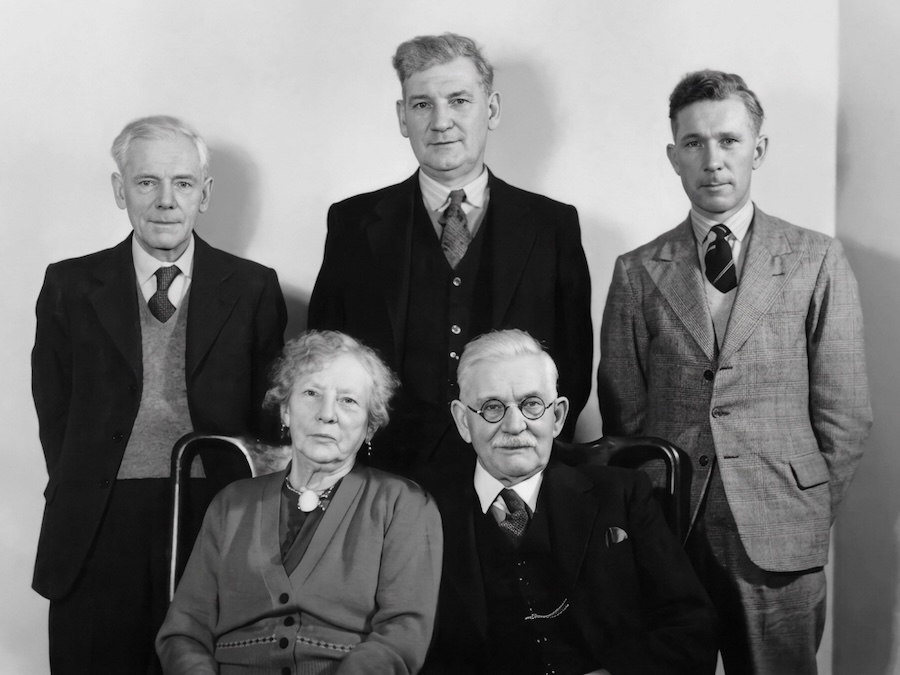
Returning to York, Augustus resumed his civilian trade as a hairdresser on George Street, just a short walk from their home. He and Ellen quickly focused on growing their family, celebrating the birth of their first and only child, Joan McDonald, on June 14, 1920.
The interwar decades brought a shift in comfort and geography. Augustus moved his wife and daughter out of the dense inner-city slums of Walmgate to 22 Acomb Road—a leafy, developing suburb of York. The extended McDonald clan established deep professional roots in the local economy. His brother Wilfrid worked as a cardboard box machinist, his brother George became a fixture at the York railway works, and his aging father Timothy took a job as a scene shifter at the York Empire Theatre.
By September 1939, on the brink of World War II, the National Register highlighted a highly industrious household at 22 Acomb Road:
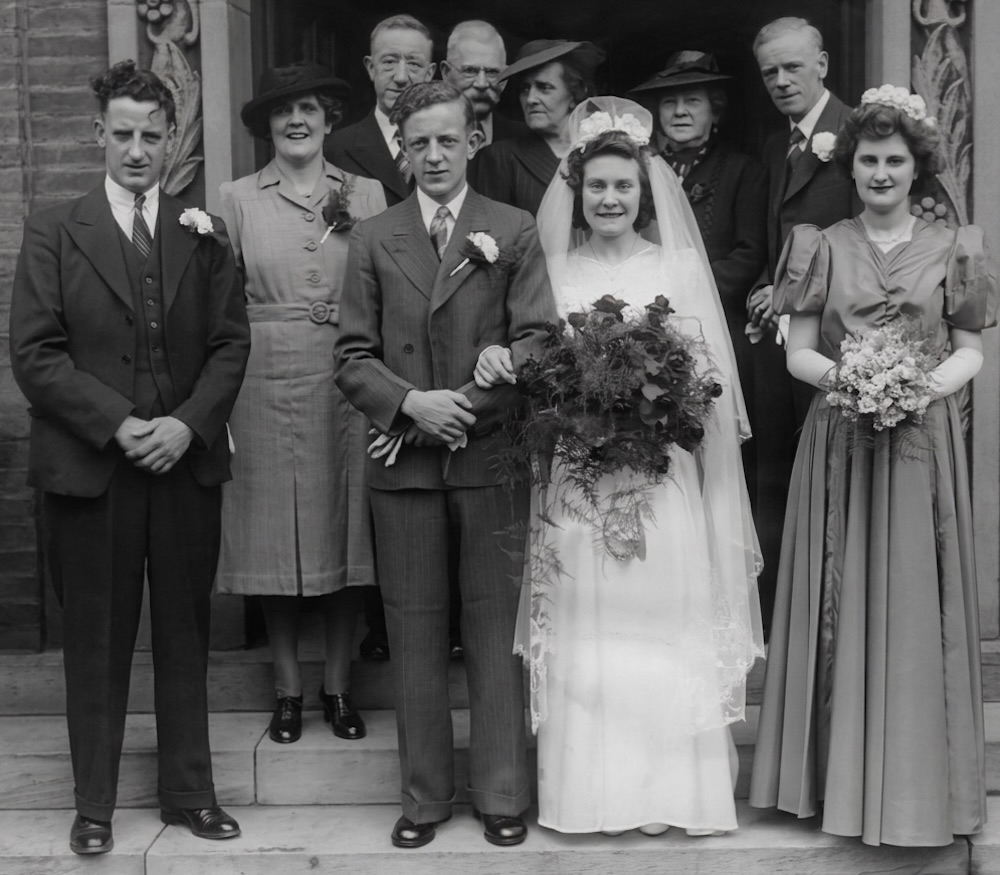
- Augustus (47): Continuing his career as an independent hairdresser.
- Ellen/Helen (47): Serving as a confectionery manageress, a prestigious role in York’s world-famous chocolate and sweets manufacturing economy.
- Joan (19): Working as a hand cardboard box manufacturer’s maker, an extremely common trade in York, and our family, including her uncle Wilfrid. Joan would eventually marry and live out her later years as Joan Rush.
Augustus outlived both of his parents, burying his father in 1953 and his mother in 1956. Having lived to witness York evolve through two world wars, watched his daughter grow up and raise a family, and retire to Burton Stone Lane, Augustus McDonald passed away in October 1974 at the age of 82. Eleanor passed away just five years later at the age of 87.
Family Tree
Our 1st Cousin 2x removed, Augustus, was the oldest surviving child of our great grandaunt, Elizabeth Edgar. We share our 2nd Great Grandparents, John Thomas ONIONS (1842-1924) & Ann LUMSDOM (1849-1925). Augustus’ uncle, James Albert Edgar, served with the Kings Royal Rifle Company in France from 1915 until the cessation of hostilities.
- Benjamin ONIONS (1795-1853) & Jemima ABEL (1797-1869)
- Martha Edgerton ONIONS (1822-1890) & Unknown
- John Thomas ONIONS (1842-1924) & Ann LUMSDOM (1849-1925)
- Jane Ann Edgar (1867-)
- John Thomas Edgar (1869-1947)
- Elizabeth Edgar (1870-1956) & Timothy McDonald (1868-1953)
- Augustus McDonald (1892–1974) & Ellen Hick (1892-1979)
- Joan McDonald (1920-2008) & Sidney Rush (1918-2003)
- Wilfrid Harold McDonald (1894–1990)
- Mabel McDonald (1897–1912)
- Hector McDonald (1900–1912)
- George Ernest McDonald (1910–2004)
- Augustus McDonald (1892–1974) & Ellen Hick (1892-1979)
- Martha Edgar (1873-1968)
- Maude Mary Edgar (1875-1968)
- Margaret Edgar (1878-1881)
- William Edgar (1880-1938)
- Margery Edgar (1883-1904)
- Robert Edgar (1885-1962)
- Adelaide EDGAR (1888-1975) & John Henry BAINBRIDGE (1892-1940)
- Charles Reginald BAINBRIDGE (1915-1994)
- Our direct family line…
- Kenneth Norman Bainbridge (1920-2007)
- Ronald Geoffrey Bainbridge (1924-2022)
- Donald Edgar Bainbridge (1926-1972)
- Doreen May Bainbridge (1928-2013)
- Charles Reginald BAINBRIDGE (1915-1994)
- James Albert Edgar (1891-1960) & Minnie Precious (1894-1973)
- Andrew Edgar (1899-1902)
- John Thomas ONIONS (1842-1924) & Ann LUMSDOM (1849-1925)
- Martha Edgerton ONIONS (1822-1890) & Unknown
Footnotes
- Cap badge, Royal Flying Corps, 1912, National Army Museum ↩︎
- No. 59 Squadron was formed at Narborough Airfield in Norfolk on 1 August 1916 as a squadron of the Royal Flying Corps. On 13 February 1917, the squadron crossed the English Channel, deploying to Saint-Omer in northern France. Wikipedia ↩︎
- The Sam Browne belt is a leather belt with a supporting strap that passes over the right shoulder, worn by military and police officers. It is named after Samuel J. Browne (1824–1901), the British Indian Army general who invented it. Wikipedia ↩︎
- The official term used by the British Army in the First World War was “soldier-servant”. Every officer was assigned a servant, usually chosen by the officer from among his men. J. R. R. Tolkien’s observations while in military service during World War I of the relationship between a batman and his officer informed how he wrote the relationship between the characters Samwise Gamgee and Frodo Baggins (introduced in The Fellowship of the Ring in 1954). Carpenter, Humphrey, ed. (1981). The Letters of J.R.R. Tolkien. London: Allen & Unwin. ISBN 0-04-826005-3. WikipediWikpedia ↩︎
- Grand Headquarters (G.H.Q.) 3rd Brigade, Established 16 January 1916 at Beauval. Disbanded on 10 March 1919. Wikipedia ↩︎
- Mean Streets Gallery, The Press, 14th August 2006 ↩︎
- 3 Dennis Street, Walmgate, York, displayed with historic Ordnance Survey maps courtesy of NLS.uk ↩︎
- Yesterday Once More takes a trip back in time to Walmgate’s forgotten slums today. These extraordinary photographs – some showing streets that no longer exist because of slum clearance – show just how hard life was in this corner of York as recently as the 1930s. In the main picture, three children stand at the foot of Dennis Street facing the River Foss, which dates back to 1912. Two girls perch on the wall above them, next to a row of washing. The Press, 14th August 2006 ↩︎
- PHOTO OF THE WEEK: This is York in 1922. Can you guess where? Dennis Street Outhouse, York Press, 21 May 2019 ↩︎
- Map of York 1852. Large scale map of York was surveyed between 1849 and 1851 by Captain Tucker R.E. for the Ordnance Map Office. The original map is drawn at a scale of five feet to one statute mile (1:1056). It is highly detailed showing, for instance, the layout of the pews in each church. The map was published in 21 separate sheets in September and October 1852. Each sheet was sold for 2 shillings. This online version has been produced from a series of high resolution scans of the copies held in the York City Archives. The scans of the 15 central panels have been ‘stitched’ together and the resultant single image has been geo-referenced so that the map can be viewed on mobile devices whilst in use in the City centre.
This version of the 1852 map has been produced through a collaboration with City of York Council. ↩︎ - Royal Aircraft Factory R.E.8, 8 September 2012, Duxford Airshow 2012, Wikimedia ↩︎
- Royal Aircraft Factory R.E.8 is a British two-seat biplane reconnaissance and bomber aircraft of the First World War that was designed and produced at the Royal Aircraft Factory. It was also built under contract by Austin Motors, Daimler, Standard Motors, Siddeley-Deasy and the Coventry Ordnance Works. Wikipedia ↩︎
- Royal Air Force operations record books 1911-1963, The National Archives ↩︎
- Battle of Cambrai 1917, Wikipedia ↩︎
- Operation Michael (German: Unternehmen Michael) was a major German military offensive during World War I that began the German spring offensive on 21 March 1918, Wikipedia ↩︎
- The Royal Air Force (RAF) was formed towards the end of the First World War on 1 April 1918 through the merger of the Royal Flying Corps (RFC) and the Royal Naval Air Service (RNAS). Wikipedia ↩︎
- 1918 Bristol F.2B Fighter, British and Colonial Aeroplane Company, Shuttleworth Collection, Old Warden, Bedfordshire. 17th June 2017, Wikipedia ↩︎
- Bristol F.2 Fighter is a British First World War two-seat biplane fighter and reconnaissance aircraft developed by Frank Barnwell at the British and Colonial Aeroplane Company later known as the Bristol Aeroplane Company. It is often called the Bristol Fighter, “Brisfit” or “Biff”. Wikipedia ↩︎
- The Hundred Days Offensive (8 August to 11 November 1918) was a series of massive Allied offensives that ended the First World War. Beginning with the Battle of Amiens (8–12 August) on the Western Front, the Allies pushed the Imperial German Army back, undoing its gains from the German spring offensive (21 March – 18 July). Wikipedia ↩︎
- Caudry is a commune in the Norddepartment in northern France. The town is mostly known as the Capital City of French Lace (along with Calais). Wikipedia ↩︎
- A formal group portrait of the Officers of No. 59 Squadron, Royal Air Force (RAF), Caudry, 1918, The Royal Air Force on the Western Front 1918, Photographs, IWM ↩︎
- Airmen released from service after WW1, liable for recall whilst on the reserve. Class disbanded and all airman in the class discharged – 30 April 1920. RAFweb.org ↩︎
References
- St Dennis Street, Walmgate, York, Ordnance Survey, 25 inch Scotland, 1892-1949 England and Wales 1841-1952, maps.NLS.uk
- St Denys Walmgate, York City Centre Churches
- St Denys, Walmgate, A Church Near You
- Dennis Street, Walmgate, York, Google Streetview
- Life in York’s Victorian workhouse, York Civic Trust