Anthony Fussey & The Twenty Perches
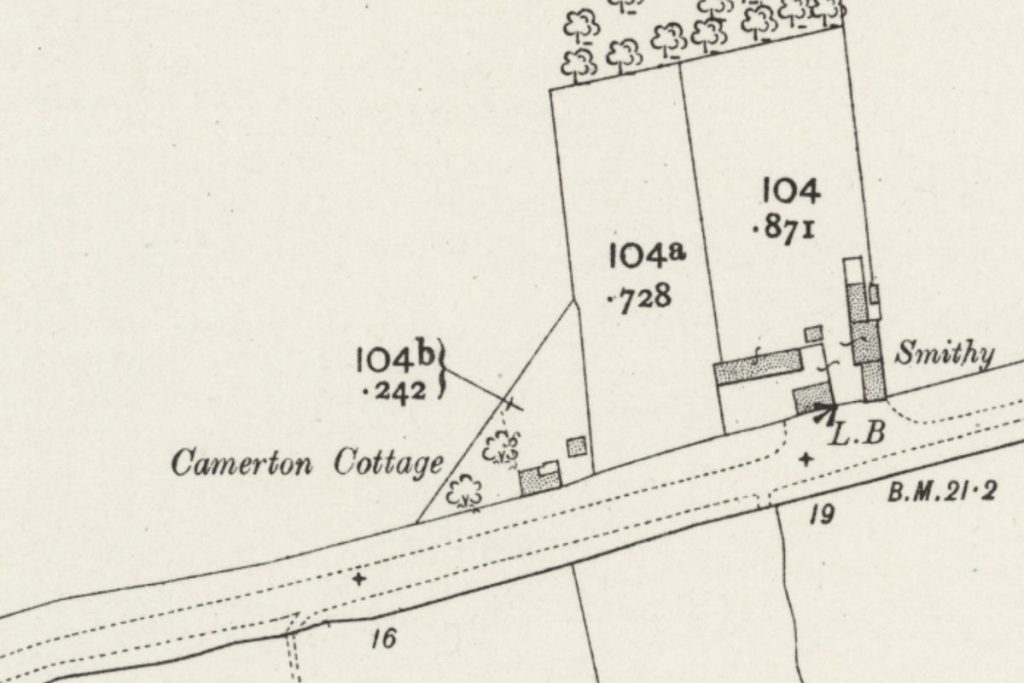
Anthony FUSSEY (1784–1860), our 4th Great Grandfather, was a resilient agricultural laborer whose life was rooted entirely in the Holderness peninsula of the East Riding of Yorkshire, where he and his wife achieved the remarkable feat of raising a massive family of 15 children on a tiny plot of land measuring just 20 perches. Living through the peak of the British Agricultural Revolution1, Fussey’s life at Camerton Cottage in Skeckling with Burstwick serves as a powerful testament to working-class grit and ingenuity. While a mere 20 perches—equivalent to just half a rood, or one-eighth of an acre—sat in stark, microscopic contrast to the sprawling 700-acre estate of Camerton Hall right next door, Fussey maximized this small footprint to anchor his household against the sweeping hardships of 19th-century rural labor. Though he spent his days sweating over other men’s clay fields as an illiterate agricultural labourer or “Ag Lab,” this tiny homestead served as the launching pad for a generation that would successfully break the cycle of rural poverty, climbing the social ladder into independent farming or crossing the Atlantic to build industrial legacies in America.
The Early Life of Anthony Fussey
Anthony FUSSEY2 was born in Ryehill3, Yorkshire, in September 1784, the youngest of five siblings. He was baptized on September 5, 1784, at All Saints Church in the parish of Skeckling-cum-Burstwick. His early years were shaped by significant loss of his mother at the age of 4. Anthony was raised by his father William FUSSEY in the same parish where he would also marry.
Marriage & 15 Children
At age 30, Anthony, a servant-man, married Anne SPROXTON (1797–1875), spinster, on November 28, 1814, in Skeckling-cum-Burstwick, where they were both raised and lived. Over the next 25 years Anne gave birth to 15 children. The sheer scale and geography of their expanding family map his early working years:
- Mary(1815–) – Born in Tunstall
- Frances(1817–1881) – Born in Skeckling with Burstwick
- Hannah(1819–) – Born in Skeckling with Burstwick
- Anthony(1820–1874) – Born in Skeckling with Burstwick
- Lydia(1822–) – Born in Skeckling with Burstwick
- Richard(1823–1886) – Born in Skeckling with Burstwick
- Anne(1825–) – Born in Skeckling with Burstwick
- Timothy(1827–1876) – Born in Ryehill(Later immigrated to Detroit, Michigan)
- William(1828–1911) – Born in Ryehill
- Francis ‘Frank’(1831–) – Born in Skeckling with Burstwick
- Jane(1832–1853) – Born in Skeckling with Burstwick
- Elizabeth(1835–1900) – Born in Yorkshire
- Emma(1837–1902) – Born in Preston
- Robert(1838–) – Born in Ryhill
- Eleanor ‘Ellen’(1840–) – Born in Keyingham
Hardship, Labour, & Census Records
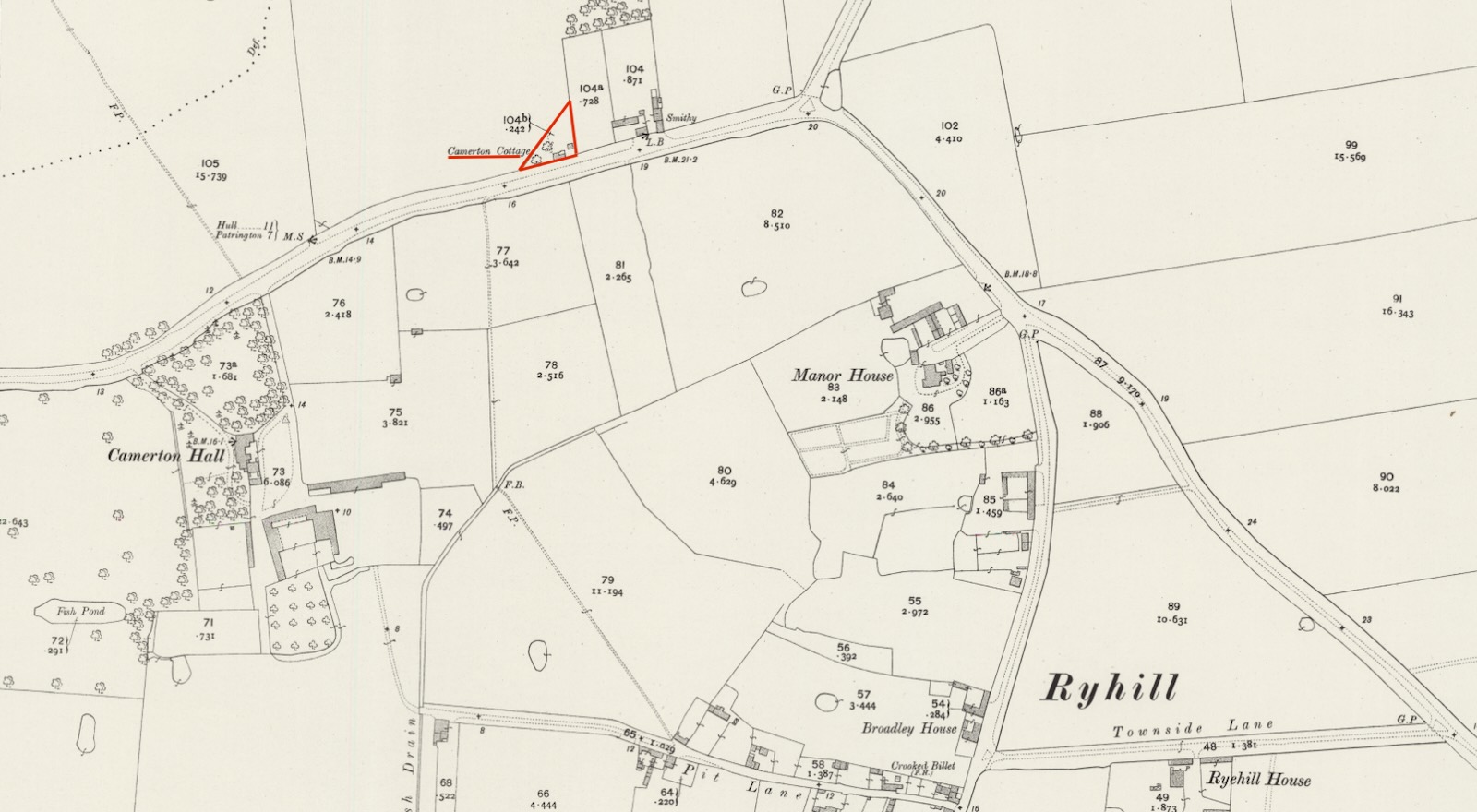
The Fussey family lived in a small cottage, Camerton Cottage, on a plot of just 20 perches or Poles (about one-eighth of an acre5). The corner field plot, next to Camerton Hall, was a remnant of the post-enclosure field system. The terms Poles and Perches6 were interchangeable just as Rods & Roods were also equivalents.
- 1 perch = 5½ yards x 5½ yards
- 1 perch = 30.25 square yards
- 1 perch = 25.29 square meters
- 20 perch = 0.125 acres / 505 square meters
- 160 perch = 1 acre
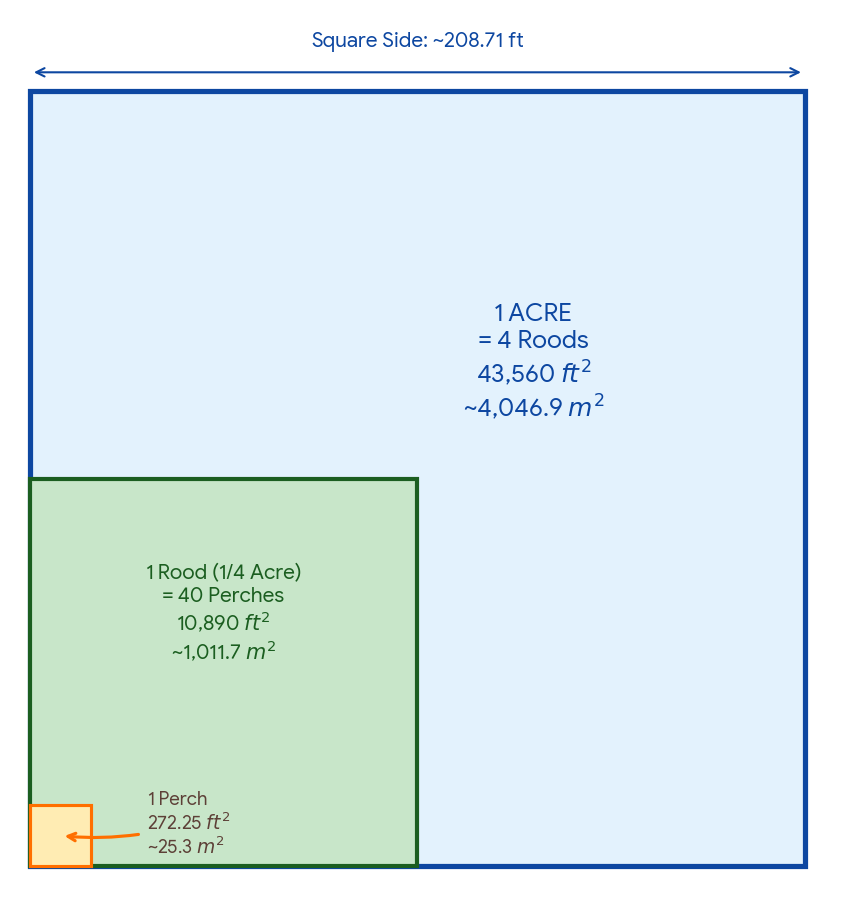
As a comparison, our two-bedroom home today occupies a double-lot in Pacifica, California, of 6799 square feet, equating to 0.156 acres or 25 perches.
To support his vast household, Anthony worked continuously as an agricultural laborer (“Ag Lab”), navigating the intense manual toil of Yorkshire’s clay fields.
- 1841 Census:7 Anthony (recorded as age 50 due to census rounding rules) was living at Camerton Cottage in Ryehill. Seven of his children—ranging from 20-year-old Hannah down to 1-year-old Ellen—stuffed the modest home. The older children had already left to find work as domestic farm servants.
- 1851 Census:8 At age 66, Anthony was still working the land. He and Anne (53) lived at Camerton Cottage in Ryehill with their son Robert (12, already working as an Ag Lab) and daughter Ellen (10, a scholar). Their tiny 20-perch plot sat directly next door to Camerton Hall, a massive 700-acre farm employing 17 laborers—highly likely the very land Anthony spent his life sweating over.
- 1853 Tragedy:On March 8, 1853, his 20-year-old daughter, Jane, passed away.
Award & Recognition?
In 1846, our 4th Great Grandmother, Anne Fussey née SPROXTON, was awarded £2 as a Class E–Labourers’ wife who had placed out the greatest number of daughters in respectable servitude. It would appear that her husband also received recognition two years earlier from the East Riding Agricultural Society’s Exhibition. Anthony received £3 as a Class A–Labourer in husbandry (who have not occupied more than half an acre of land) who have brought up and placed out to service the greatest number of children, without receiving parochial relief. The award was published in The Farmer’s Magazine, June 1844, as well as multiple local newspapers including The Hull Packet.9
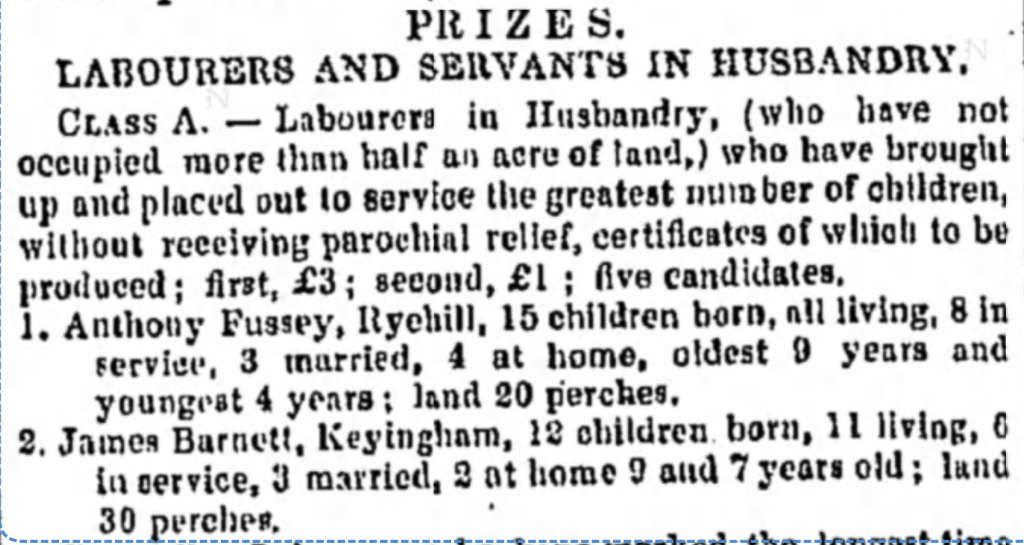
1. Anthony Fussey, Ryehill, 15 children born, all living, 8 in service, 3 married, 4 at home, oldest 9 years and youngest 4 years: land 20 perches.
2. Jашеs Barnett, Keyingham, 12 children born, 1l living, 6 in service, 3 married, 2 at home 9 and 7 years old; land 30 perches.
The Hull Packet; and East Riding Times Archive: Friday, August 2, 1844
EAST-RIDING (YORKSHIRE) AGRICULTURAL SOCIETY’S EXHIBITION.
The annual show of stock and implements in connection with that extensive body, the East Riding Agricultural Association, took place at Beverley, on Wednesday, 31st of July last, and presented one of those splendid collections of animals and instruments which cannot be found in any but a country where farming is something more than a mere mechanical occupation. No district could be more likely to produce a show of the highest character than that of Beverley is a focus. Where the wolds of Yorkshire contribute the excellence of their herds, their flocks, and their implements, there it may be relied on that the exhibition will be such as must gratify the most sceptical, and from which all who take an interest in agricultural improvement may derive a lesson, and be made to feel the wonderful results which can be accomplished by a proper and well-grounded knowledge of the science of cultivation and the philosophy of feeding. Thus the exhibition at Beverley, was replete with the most admirable specimens in every department; there was nothing exceptionable in any of the classes: all were and perfect, affording gratification to all who looked upon them, and giving to those who had to decide upon the respective merits of each no little difficulty in awarding the palm of superiority…
We now submit a list of the premiums, as conferred by the judges, without making any remark upon the separate classes. It is sufficient to repeat that all which were put in competition had an extraordinary degree of merit, and the decisions of the judges gave very general satisfaction.
PRIZES.
LABOURERS AND SERVANTS IN HUSBANDRY.
Class A.–Labourers in husbandry (who have not occupied more than half an acre of land) who have brought up and placed out to service the greatest number of children, without receiving parochial relief, certificates of which to be provided; first, 3/. ; second 1/. ; five candidates.
Anthony Fussey, Ryehill, 15 children born, all living–8 in service, 3 married, 4 at home (oldest 9 years, and youngest 4 years) ; land, 20 perches.
James Barnett, Keyingham, 12 children born, 11 living–6 in service, 3 married, 2 at home (9 and 7 years old) ; land, 30 perches.
The Farmer’s Magazine, Volume the Ninth, January to June, MDCCCXLIV, London10
Death & Final Resting Place
Anthony Fussey died at home in Camerton Cottage on December 4, 1860, at the age of 76. His death notice was recorded locally, marking the end of a long life of unceasing labor. He was returned to the church of his infancy and buried in All Saints Churchyard in Burstwick11.
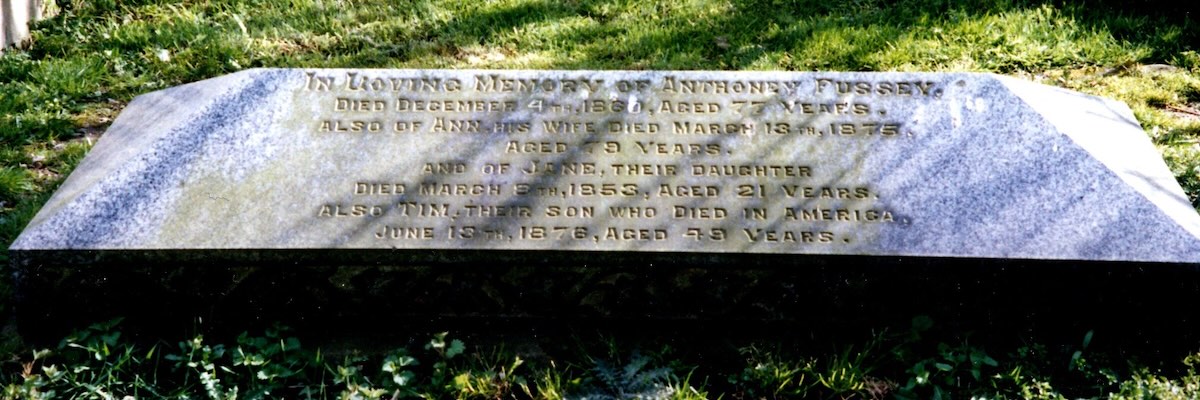
Though he spent his entire life working another man’s fields, his survival and the legacy of his 15 children stretched across the globe—most notably through his son Timothy, whose own son would become a premier industrial executive in Detroit, Michigan.
The surviving children of Anthony Fussey and Anne Sproxton lived during a period of massive economic shift in 19th-century England. While Anthony lived his entire life working the soil on a tiny 20-perch plot, his children’s occupations tell the story of a family working hard to break out of rural poverty.
Their occupations fall into clear categories based on the standard social realities of Victorian East Yorkshire:
The Sons: Laborers, Farmers, & Migrants
For the sons, life began in the grueling clay fields of Holderness as Agricultural Laborers (Ag Labs), but several managed to move up the ladder or seek new horizons:
- Anthony Fussey Jr. (1820–1874): Began as a farm hand but achieved a significant step up in Victorian rural society, later establishing himself as a Cowkeeper / Smallholder Farmer. He remained in the Holderness area, managing his own livestock and small milk production.
- Richard Fussey (1823–1886): Remained in the East Riding agricultural sector, working his entire life as a skilled Agricultural Laborer and teamster, managing heavy horse teams for larger local estates like Camerton Hall.
- Timothy Fussey (1827–1876): Began life working the Yorkshire fields. Seeking a clean break from the rigid English class system, he made the monumental decision to cross the Atlantic Ocean. He immigrated to the United States and settled in Detroit, Michigan, where he worked in the booming tanning and leather manufacturing industry—laying the financial and social foundation for his son, Alfred William Fussey, to become an industrialist and corporate president.
- William FUSSEY (1828–1911): Raised on his father’s modest 20-perch plot, he spent his early years as a farm servant at Forkerleys Farm before marrying Mary BAKER (1823-1913) at Beverley Minster in 1853. Though illiterate, he possessed immense drive, transitioning from a gardener on Staithes Road in 1861 into a tenant farmer of 24 acres in Coniston by 1871. He eventually moved north to Bridlington, scaling his operation to a 40-acre farm that employed his adult sons, before retiring to Long Lane where he lived comfortably flanked by his sons’ independent farms until his death at age 82.
- Francis ‘Frank’ Fussey (1831–): Followed the familial pattern, starting as a live-in Farm Servant during his adolescence before transitioning to an adult career as an Agricultural Laborer in the surrounding parishes.
- Robert Fussey (1838–): The 1851 census catches him at just 12 years old already working out in the fields as an Agricultural Laborer to bring income home to the cottage. By adulthood, he climbed the ranks to become the Tenant Farmer of Humbleton Manor House, managing a substantial historic agricultural property in the area.
The Daughters: Domestic Servants & Farm Wives
In 19th-century Yorkshire, daughters of laboring families could not afford to stay at home past childhood. They were expected to earn their keep immediately:
- The Teen Years (Domestic Servants): The older daughters—including Mary, Frances, Hannah, Lydia, and Anne—all left the 20-perch family cottage by their early teens. They were hired out at local agricultural hiring fairs as Live-in Domestic Servants and Dairy Maids on large, sprawling 500+ acre farms throughout the East Riding countryside. Their jobs involved everything from heavy scrubbing to milking cows and preparing food for wealthy landowners.
- Adulthood (Farm Wives & Local Trade): Upon marriage, surviving daughters like Frances, Elizabeth, and Emmatransitioned into managing their own working-class households. They married local blacksmiths, agricultural laborers, and shoemakers, frequently taking on cottage industry work (such as seamstressing or laundering) to keep their families afloat.
The Enduring Legacy of 20 Perches
Anthony Fussey’s life closed precisely where it began—in the quiet soil of the Holderness peninsula—but the legacy generated from his tiny 20-perch homestead expanded across horizons he could never have imagined. When he was laid to rest in All Saints Churchyard in 1860, he left behind no vast acreage, no grand manor, and no material fortune. Instead, his enduring wealth was his family. The micro-plot at Camerton Cottage, which stood in the literal shadow of the 700-acre Camerton Hall estate, had served its purpose not as a permanent trap of generational poverty, but as a sturdy launching pad.
Family Tree
Anthony FUSSEY was the fifth and youngest child of our 5th Great Grandparents, William FUSSEY & Joannah HEWSON. Anthony and Anne SPROXTON, our 4th Great Grandparents produced fifteen children between 1815-1840. Our direct line is descended from their ninth child, William FUSSEY (1828-1911).
- William FUSSEY (1746-?) & Joannah HEWSON (1755-1788)
- Hannah Fussey (1775-1800)
- Mary Fussey (1777-1842)
- Jane Fussey (1779-?)
- William Fussey (1781-)
- Anthony FUSSEY (1784-1860) & Anne SPROXTON (1797-1875)
- Mary Fussey (1815-?)
- Frances Fussey (1817-?)
- Hannah Fussey (1819-?)
- Anthony Fussey (1820-?)
- Lydia Fussey (1822-?)
- Richard Fussey (1823-1886)
- Anne Fussey (1825-?)
- Timothy Fussey (1827-1876)
- William FUSSEY (1828-1911) & Mary BAKER (1823-1913)
- Jane Elizabeth FUSSEY (1861-1965) &Joseph Henry HUDSON(1862-1930)
- Bernard HUDSON (1888-1939) & Elsie Mary HARDACRE (1892-1963)
- Sheila Mary HUDSON (1925-2016) &Albert Wear CLARK(1921-1983)
- Our direct line…
- Sheila Mary HUDSON (1925-2016) &Albert Wear CLARK(1921-1983)
- Bernard HUDSON (1888-1939) & Elsie Mary HARDACRE (1892-1963)
- Jane Elizabeth FUSSEY (1861-1965) &Joseph Henry HUDSON(1862-1930)
- Francis Fussey (1831-?)
- Jane Fussey (1832-1853)
- Elizabeth Fussey (1835-?)
- Emma Fussey (1837-?)
- Robert Fussey (1838-?)
- Eleanor Fussey (1840-?)
Footnotes
- British Agricultural Revolution, or Second Agricultural Revolution, was an unprecedented increase in agricultural production in Britain arising from increases in the productivity of labour and land between the mid-17th (or earlier) and late 19th centuries, Wikipedia ↩︎
- The unusual surname with variant spellings Forsey, Fursey, Fussey and Fuzzey is an English surname with topographical roots, meaning a person who lived near a gorse-covered enclosure. It is derived from the old English pre 7th Century “fyrs” meaning furse and “(ge)haeg” an enclosure; hence “dweller by the furze covered enclosure”. SurnameDB ↩︎
- Ryehill, East Riding of Yorkshire, Wikipedia ↩︎
- Camerton Cottage, Ryehill, East Riding of Yorkshire, Side by Side Map Images: Ordnance Survey, 25 inch England and Wales 1841-1952 & Google Satellite Map, National Library of Scotland ↩︎
- How to convert perches to square metres, Alexandra Buchanan Architecture ↩︎
- Acres, Roods and Perches – or Poles? Rootsweb ↩︎
- Anthony Fussey in the 1841 England Census, Class: HO107; Piece: 1221; Book: 18; Civil Parish: Burstwick; County: Yorkshire; Enumeration District: 19b; Folio: 6; Page: 6; Line: 11; GSU roll: 464220, Ancestry.com ↩︎
- Anthony Fussey in the 1851 England Census, Class: HO107; Piece: 2364; Folio: 55; Page: 8; GSU roll: 87640, Ancestry.com ↩︎
- The Hull Packet; and East Riding Times Archive: Friday, August 2, 1844 • Hull, East Yorkshire, England Page 5, Newspapers.com ↩︎
- The Farmer’s Magazine, Volume the Ninth, January to June, MDCCCXLIV, Rogerson & Tuxford, London, 1844 ↩︎
- All Saints Churchyard, Burstwick, East Riding of Yorkshire, Wikipedia ↩︎
- Anthony Fussey, Ann Sproxton, Jane Fussey, Tim Fussey, All Saints Churhyard, Burstwick, FindaGrave.com ↩︎
References
- Imperial Measures of Area, The Edkins
- Camerton, East Riding of Yorkshire, Wikipedia
- Camerton Cottage, 5 Main Road, Ryehill, HU12 9NN, England, Google StreetView
- Grade 1 Listed Building: Church of All Saints, Church Row, Burstwick, East Riding of Yorkshire, Historic England


