Captain Luther Little’s Tall Tales
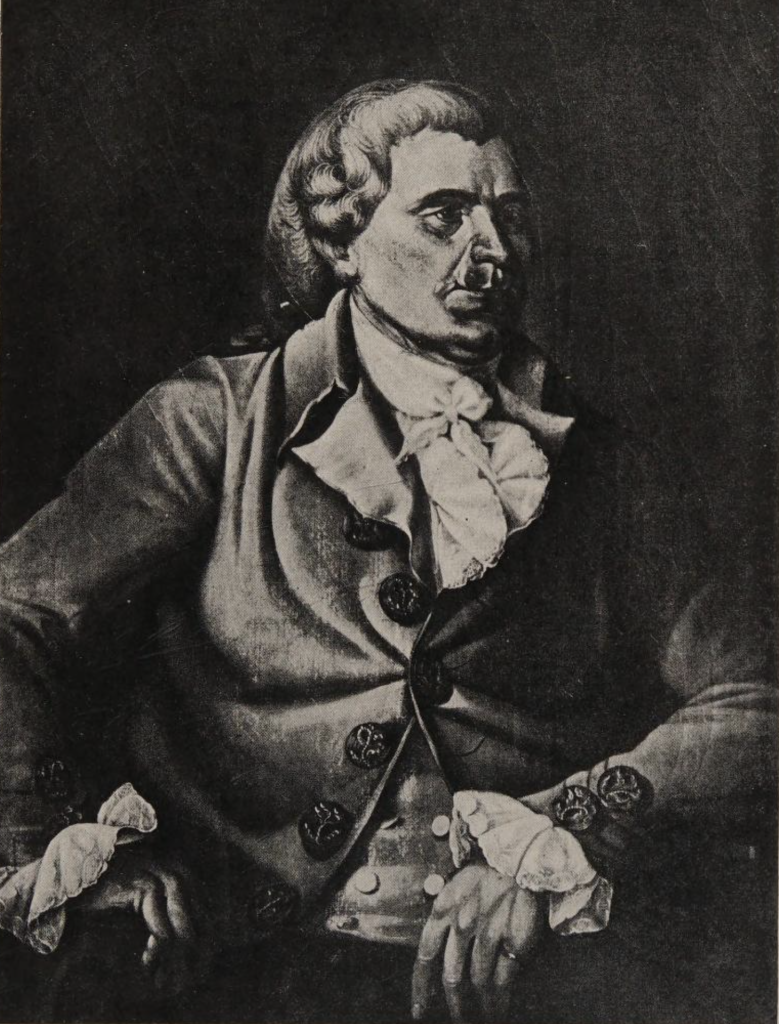
Our 4th Great Grandfather, Luther LITTLE, from the Bacon family line was a New England sailor, naval officer, and privateer1. Hailing from Marshfield, Plymouth, Massachusetts, Luther’s career at sea spanned the Revolutionary War from 1771-1799 but represented only the first half of his life.
In his 85th year, Luther sat down with his granddaughter and recounted the tales of his life at sea, starting at the age of 15 years. The young sailor had been stranded far from home, suffered injury and illness, marooned and shipwrecked, and returned home destitute on more than one occasion.
Sailing from New England along the east coast, then onto the Caribbean, West Indies, Portugal, & Spain, Luther evaded the British Royal Navy, to smuggle himself, provisions, and ammunition into the American Colonies2.
Age 16, Luther was working as a Foremast Hand3 on a sloop out of the Pungo River, North Carolina, bound for Sint Eustatius4. ‘Statia’ is a small rocky volcanic island in the northeast of the West Indies. It is neither large nor fertile, covering less than seven square miles, but as a free port became the hub of gun running during the Revolutionary War.
On the same day of his escape he saw a sloop beating out of the river and hailed her skipper. A foremast hand was wanted and Little shipped aboard for the West Indies. During the passage they were chased by an English frigate, and ran in under the guns of the Dutch fort at St. Eustacia [sic Eustatius]. Cargo and vessel were sold, and Luther Little transferred himself to another sloop bound for Rhode Island.
Page 101, Captain Luther Little’s Own Story, The Ships and Sailors of Old Salem, Archive.org
By pure coincidence we travelled to Sint Maarten & Sint Eustatius in December 2024 for a scuba diving vacation. Touring Fort Oranjestad we climbed the battlements to see those same cannon still overlooking the safe harbor.
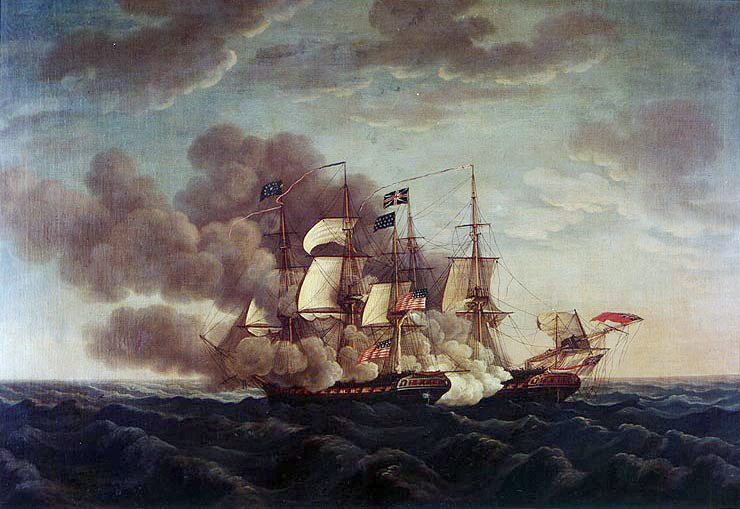
In 1780 Luther entered service with the State of Massachusetts Navy5, serving as midshipman and prizemaster, aboard the Protector6, a frigate with 230 men and 26 guns. The First lieutenant, George Little, happened to be his brother. The Protector fought one notable action against a British Privateer Admiral Duff7 before the Royal Navy captured her in 1781.
In early June, midway through a six-month cruise, the Protector perceived a large ship through the morning fog sailing under British colours. The First Lieutenant hailed the ship and they identified as the Admiral Duff bound for London and requested to know “What ship is that?” The Protector gave no answer but switched their English ensign for the thirteen stripes of the United States and, almost simultaneously, opened fire!
The ships exchanged broadside volleys for about an hour whilst marines killed all the top men aboard the Admiral Duff, including the wheel man, causing the ship to steer into the Protector. Tying the ships together the marines continued to fire onto the quarterdeck to prevent the British from reloading their guns. Luther was commanding the third 12 pounder, firing 19 shots, while the midshipman commanding the fourth 12 pounder had already lost his head. The Admiral Duff was sinking, dozens of men dead or dying, masts shattered, sails and rigging burning. The fire reached a barrel of gunpowder and blew up the quarterdeck.
At this time from one of their forward guns there came into the port where I commanded a charge of grape shot. With three of them I was wounded, one between my neck bone and windpipe, one through my jaw lodging in the roof of my mouth, and taking off a piece of my tongue, the third through the upper lip, taking away part of the lip and all of my upper teeth. I was immediately taken to the cockpit, to the surgeon.
The ships and sailors of old salem, Chapter VI, Captain Luther Little’s Own Story (1771-1799)
Luther’s ravaged body was put aside while the surgeon focused on those more likely to survive, despite being conscious throughout and hearing the surgeon’s prognosis. The surgeon finally bandaged Little’s lip and jaw before operating on the deepest wound in his neck, apparently losing two gallons of blood in the process.
After the sinking of the Admiral Duff they rescued fifty five sailors from the water and set sail for Halifax, Nova Scotia. However, one of the prisoners brought West Indies Fever aboard and within 10 days sixty of the crew were suffering from the epidemic.
Grapeshot is a type of ammunition that consists of a collection of smaller-caliber round shots packed tightly in a canvas bag… When assembled, the shot resembled a cluster of grapes, hence the name… On firing, the canvas wrapping disintegrates and the contained balls scatter out from the muzzle, giving a ballistic effect similar to a giant shotgun.
Grapeshot, Wikipedia
Between the ship’s ongoing repairs and ailing crew, the Protector needed to evade patrols of British frigates, and survived a couple of running battles along the coast. The captain anchored off Maine for wood and water, taking the opportunity to move the invalids ashore. The surgeon set up a makeshift hospital in a farmer’s barn. Luther’s injuries were so severe, he was sent home to recover and did not return to the Protector for five months. Even then Luther’s ‘luck’ persisted as the Prize Master, he was captaining a captured vessel back to Salem whilst the Protector was captured by the British.
After his service with the Navy, Captain Luther Little turned his hand to privateering, legalized piracy, out of Salem, “that wasp’s nest of Revolutionary privateersmen.”8 Later still, sailing to the West Indies, he made twenty four successful voyages “always bringing back every man, even to cook and boy.” Finally, turning his attention to Russia, Luther made six annual voyages to St Petersburg, at a time when the American flag was unknown to that port.
At the age of 41, Captain Luther Little retired from his life at sea, returning to his ancestral farm at Marshfield9. Outliving his first wife, he married Hannah Lovell, daughter of General Solomon Lovell10 of Weymouth. Luther bought out the other heirs of the family property and retained the homestead for his wife and children. For the subsequent 44 years, Luther raised his family as a New England farmer.
Read the complete narrative of Captain Luther Little’s Own Story in Chapter VI, page 98, as narrated to Mrs. Sarah Ann Titcomb, Jan. 5, 1841, Scroll through the pages or use the search to find “Luther Little”
Family Tree
The Little family are descended from Mayflower passenger Richard WARREN & Elizabeth WALKER. Our direct descendent is the eleventh and youngest child of Captain Luther LITTLE and his second wife Hannah Pittey LOVELL. Olive LITTLE was born in Marshfield, Plymouth County, Massachusetts, like the rest of her siblings, but settled with her spouse in Boston.
- Capt Luther LITTLE (1757-1842) & Susannah White (1756-1793)
- Susannah Little (1788-1788)
- Luther Little II (1789-1815)
- Susannah Little (1792-1826)
- Capt Luther LITTLE (1757-1842) & Hannah Pittey LOVELL (1771-1826)
- Sarah Lovell Little (1799-?)
- William Fobes Little (1801-?)
- Solomon Little (1802-1877)
- Hannah Little (1804-1887)
- Priscilla Little (1806-?)
- Lydia Lovell Little (1808-?)
- James Little (1810-?)
- Olive LITTLE (1813-1855) & Ebenezer Lord ADAMS (1805-?)
- Sarah Little ADAMS (1847-1931) & Silas Edwin BACON (1854-1929)
- Silas Coleman BACON (1879-1959) & Sarah Lenella HAYDEN (1876-1953)
- Mary Hayden BACON (1912-1998) & Robert MORRIS (1911-1989)
- Direct line…
- Mary Hayden BACON (1912-1998) & Robert MORRIS (1911-1989)
- Silas Coleman BACON (1879-1959) & Sarah Lenella HAYDEN (1876-1953)
- Sarah Little ADAMS (1847-1931) & Silas Edwin BACON (1854-1929)
Footnotes
- Privateer, Wikipedia ↩︎
- Luther Little, Page 961, Naval Documents of The American Revolution, Vol. 2, United States Government Printing Office, Washington, 1966, iBiblio.org ↩︎
- Foremast Hand, The Free Dictionary ↩︎
- St Eustatius in the American Revolution, Vol. 8 No. 4 (Jul. 1903), pp683‑708, American Historical Review ↩︎
- Massachusetts Naval Militia, Wikipedia ↩︎
- Protector (1779 Frigate), Wikipedia ↩︎
- Protector-Admiral Duff Engagement, Encyclopedia.com ↩︎
- The ships and sailors of old salem, Chapter VI, Captain Luther Little’s Own Story (1771-1799), Published 1908, Internet Archive.org ↩︎
- Ford Map of Marshfield 1838, leventhalmap.org ↩︎
- Brigadier-General Solomon Lovell, Wikipedia ↩︎
References & Further Reading
- The ships and sailors of old Salem: the record of a brilliant era of American achievement, by
Paine, Ralph Delahaye, 1871-1925 - An American Sea Captain in the Revolution, The Journal of American history, by National Historical Society, Archive.org
- Luther Little, Sloop Pigeon, Success at Sea and Disaster at Penobscot, 1779, Marines in the Revolution
- Andrew Doria I (Brigantine) received a salute from the Dutch fort at St. Eustatius, 16 November 1776, the first rendered to the American flag by a foreign power, Naval History and Heritage Command
- Lieutenant Little Chases a Sea Serpent, Boston 1775
- Braithwaite; Captain Luther Little, WickedLocal.com
- MARSHFIELD PASTIMES: Luther Little takes two ill-fated boat trips, WickedLocal.com
- MARSHFIELD PASTIMES: Luther Little’s voyages come to an end, WickedLocal.com
- The Continental Navy, RevolutionaryWar.us
- History of the United States Navy, Wikiwand
- October 13, 1775: Birth of the United States Navy, ConstitutingAmerica.org
- Naval Artillery in the Age of Sail, Wikipedia
- Letter of marque (Privateering), Wikipedia
- Privateering in The Eastern Ports of Massachusetts during The American Revoultionary War 1775-1783, STORRE: Stirling Online Research Repository, 26 Oct 2023, University of Stirling
- British Naval Artillery, Kronoskaf
- Luther Little, was a marine and active in privateer service, Daughters of the American Revolution
- Captain Luther Little, FindaGrave.com
- Marshfield Historical Society
- Luther Little, FamilySearch.org
- Attributed to Frederick Andrew Bosley (1881-1942): Portrait of Captain Luther Little, Stair Galleries
- Portrait of Luther Little Late 18th Century, Mutual Art
- Hesper & Luther Little, Wikipedia
- Luther Little & Hesper, Schoonerfest
- Capt. Luther Little Way, Marshfield, Massachusetts, Google Maps



1 Response